European Individual Chess Championship 2026 Update on April 14
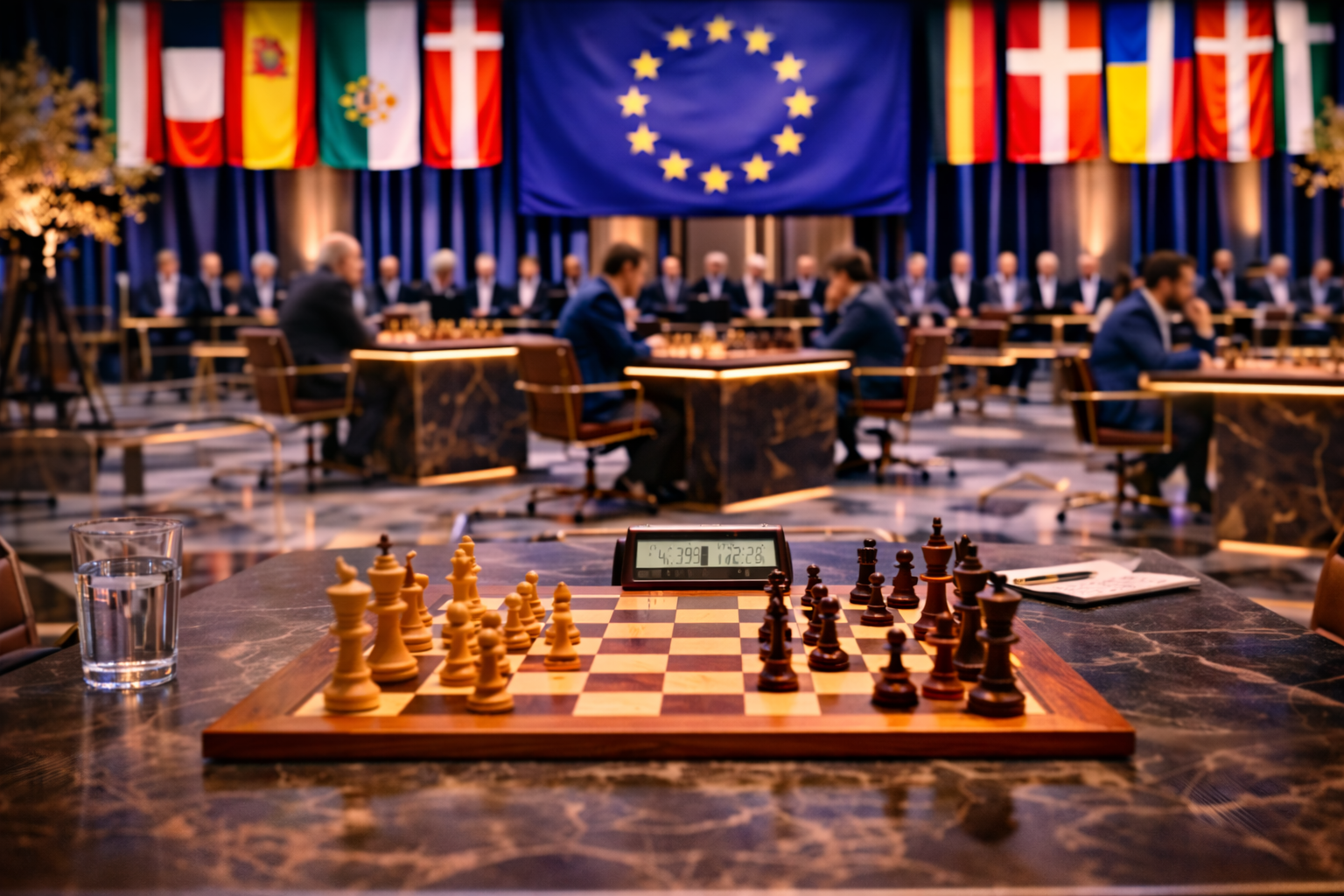
The European Individual Chess Championship 2026 is being held in Katowice, Poland, with the official event site listing the tournament dates as April 6 to April 20.
The championship is an 11-round Swiss event organized under the European Chess Union, and official tournament pages list 501 players from 43 federations competing for a €100,000 prize fund and qualification spots for the next FIDE World Chess Cup.
That combination of size, stakes, and depth is exactly why the European Championship becomes chaotic so quickly.
As of the latest public standings pages indexed on April 14, Eduardo Iturrizaga is listed first, Robert Hovhannisyan second, and Lorenzo Lodici third.
At the same time, an ECU update after five rounds reported that no player remained on a perfect score and that six players were tied for first on 4.5/5, which shows how fluid the race still is.
In other words, the event is doing exactly what a giant Swiss tournament usually does: refusing to become tidy.
Why the European Championship is always hard to read
Unlike the Candidates, this event does not move in a straight line. A round can completely reorder the leaderboard, because the field is broad, the pairings are dynamic, and a single upset changes tie-break paths for dozens of players at once.
That volatility is already visible in Katowice. The official tournament structure is Swiss-system over 11 rounds, which means early leaders still have to survive a long sequence of increasingly difficult pairings.
Add more than 500 players, World Cup implications, and constant tie-break pressure, and every half-point starts to carry extra weight.
Standings snapshot on April 14
The clearest public leaderboard snapshot available through indexed standings pages currently places Eduardo Iturrizaga first, Robert Hovhannisyan second, and Lorenzo Lodici third.
That top three is useful because it mixes an experienced elite competitor, a highly resilient Armenian grandmaster, and one of the most interesting Italian performers in the event.
Even so, readers should expect movement because Swiss standings are never static until the final rounds settle.
An earlier event update from ECU said that after five rounds six players shared first place on 4.5/5 and no one remained perfect.
That is a strong sign that the championship has not yet produced a runaway leader.
For content and SEO alike, that matters because readers are not just looking for “who is first” but also for “how stable is the leaderboard.”
Public leaderboard snapshot
PositionPlayer1Eduardo Iturrizaga 2Robert Hovhannisyan 3Lorenzo Lodici
This is the right moment in a Swiss tournament to focus less on the bare ranking and more on trajectory. Some players reach board one early and fade. Others spend the first days stabilizing, then surge once the pairings become more merit-based.
Tournament recap so far
Katowice opened with scale and pressure
The 2026 edition began in Katowice with a record 501 participants from 43 European federations.
The event also offers a €100,000 prize fund and qualification spots for the next FIDE World Chess Cup, which explains why the tournament attracts such a dense middle layer of dangerous grandmasters and ambitious international masters.
This is not the kind of Swiss where top seeds can drift through the early rounds on reputation alone.
The time control is standard classical chess: 90 minutes for 40 moves, then 30 minutes to the finish, with a 30-second increment from move one.
That format rewards players who can keep quality high deep into the fifth and sixth hour.
It also increases the chances that technical endgames, not just opening preparation, decide who stays on the top boards.
Early shocks changed the tone
One of the first major storylines was the collapse of leading seeds Igor Kovalenko and Bogdan-Daniel Deac, who both suffered unexpected defeats early in the event.
In a compact elite round robin, that would be surprising; in a 500-player Swiss, it is a reminder that nothing stays orderly for long.
Those early losses immediately widened the tournament and gave the chasing pack belief.
The same early report highlighted strong starts for Italian players including Lorenzo Lodici, Francesco Sonis Moroni, and Sabino Brunello.
For Italian readers and for a European audience in general, that adds a second layer of interest to the event beyond the overall title race.
A big Swiss championship becomes more engaging when national storylines start running in parallel with the main leaderboard.
Iturrizaga’s name matters
Iturrizaga topping the current public standings snapshot is noteworthy because he is not just another temporary board-one occupant.
He is an experienced grandmaster with the kind of practical style that often works extremely well in long Swiss events, where consistency can matter more than dazzling one-off victories.
When a seasoned player reaches the summit in an event like this, the question becomes whether he can convert momentum into tie-break security.
Hovhannisyan in second also fits the logic of the event.
He is exactly the kind of player who tends to remain relevant deep into a Swiss because he combines resilience with the ability to win difficult games without overpressing.
Lodici in third adds freshness to the top group and gives the tournament a welcome rising-story angle.
Main games and trend lines
The real headline is instability at the top
The most important competitive pattern is not one single brilliancy but the absence of a perfect front-runner. ECU’s update after five rounds explicitly said that no player was still on 5/5 and that six players were tied for first on 4.5/5.
That means the tournament has remained open long enough for form, tie-breaks, and pairings to keep interacting.
It also means that the eventual champion will almost certainly need to handle pressure rather than simply defend a clean early lead.
This matters for readers because standings alone can be misleading. In a massive Swiss, first place on Monday can become eighth on Tuesday if the top boards turn decisive. That is why a useful recap has to track not just ranking, but also the health of the leading group.
Italian momentum is one of the best side stories
Lorenzo Lodici’s place in the current top three makes Italy one of the most interesting countries to follow in Katowice.
An earlier report also flagged good momentum from Moroni and Brunello in the opening phase of the championship.
For a broad chess audience, that is compelling because a European Championship often becomes the place where strong national teams test depth beyond their biggest stars.
From a blog perspective, this is also excellent SEO territory. Searchers looking for the overall event often end up reading longer when a national angle is built into the article. In this case, Lodici gives the standings a recognizable narrative hook without forcing the piece away from the main competition.
Live coverage matters more than usual
The official event website provides live boards and real-time results, which is particularly useful in an event where standings can shift quickly and many important games are being played simultaneously.
That is not a small detail; it is central to how fans should follow the tournament.
When more than one contender is sharing the lead or floating around it, the championship is best understood as a moving network rather than a fixed ranking.
What to watch in the next rounds
The next key question is whether the event produces separation or stays compressed. The public data available on April 14 suggests compression rather than dominance, because the top positions are still changing and ECU’s own mid-event update emphasized a shared lead rather than a single runaway scorer.
That makes tie-breaks especially important. In Swiss events, players with the same score can have very different tournament health depending on opposition quality, color balance, and how their previous opponents continue to score. Even strong players know that “same points” does not always mean “same chances.”
A second question is whether Iturrizaga can turn the current lead into something sturdier.
A third is whether Lodici can stay on the first pages of the standings deep enough into the event to create a genuine podium or title push.
Those are not identical problems: leading is about control, while staying near the top is often about timing.
Want to study the turning points from Katowice more deeply, save critical positions, and compare your own evaluations with engine suggestions? Try DeepBlunder and keep following championship coverage on the DeepBlunder blog.
Useful official links for readers
Readers who want to follow the event live can use the official tournament website, the live boards page, and the public standings/results pages.
For tournament structure and federation-level context, the FIDE announcement page is also useful.
Why this championship matters beyond one title
The European Individual Championship is not just another open. It is one of the most efficient stress tests in chess, because players have to survive elite-level preparation, huge-pool unpredictability, and the mathematics of tie-breaks all at once.
That is why early upsets against players like Kovalenko and Deac matter so much.
They do not only remove big names from clean control; they also alter how the entire top section breathes.
In a Swiss of this scale, every upset has a long shadow.
Katowice also matters because the event is part title race, part qualification funnel. Official information confirms that World Cup spots are on the line, which means players are fighting for more than one trophy photo.
That broadens the drama and keeps more boards relevant later into the event.
A player sitting outside first place can still be in the middle of an extremely meaningful tournament.
Conclusion
The European Individual Chess Championship 2026 has reached the classic Swiss phase where the standings are real but not yet final in character. Public leaderboard pages currently place Eduardo Iturrizaga first, Robert Hovhannisyan second, and Lorenzo Lodici third, while ECU’s earlier update showed just how crowded the top remained after five rounds.
That combination tells the story of Katowice better than a single number can. The event is large, volatile, and still open enough for late swings, which is exactly why it keeps attracting attention from players, federations, and fans across Europe.
For readers, the smartest way to follow the championship now is to track both the leaderboard and the trend lines: who is stabilizing, who is spending energy to keep pace, and who is still climbing at the right time. In a tournament like this, momentum can be as valuable as rating.
FAQ
Where is the European Individual Chess Championship 2026 being played?
It is being played in Katowice, Poland.
How many players are in the event?
Official tournament information says 501 players are participating.
How many rounds does the championship have?
The event is an 11-round Swiss tournament.
Who is leading the standings on April 14, 2026?
The latest public standings pages indexed on April 14 list Eduardo Iturrizaga in first place.
Who are the other main names near the top?
The same public standings snapshot lists Robert Hovhannisyan second and Lorenzo Lodici third.
Are World Cup qualification spots available through this event?
Yes, the official event announcement says qualification spots for the next FIDE World Chess Cup are at stake.
Why does the leaderboard change so fast in this event?
Because the championship uses an 11-round Swiss format with a very large field, pairings and tie-breaks can reshape the top group from round to round.
From the same category
Keep reading
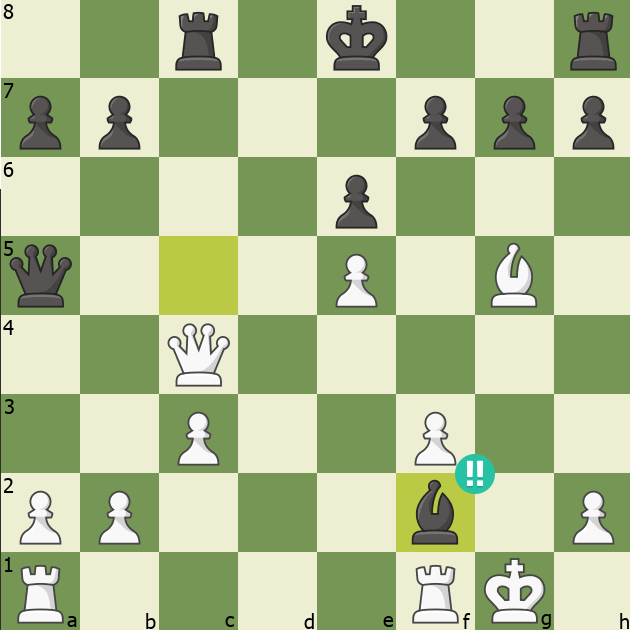
Brilliant Chess Move: Stunning Bishop Sacrifice Led to Checkmate
Most chess players have experienced it at least once. You spot a free pawn, win some material, and feel confident about your position—only to discover that your opponent had seen something much deeper.

Why Your Chess Accuracy Drops After Move 15
If your chess accuracy drops after move 15, the problem is not that you suddenly become a worse player. The problem is that the game has shifted from memory to understanding, and you have not trained that transition enough.

Why You Always Get in Time Trouble (And How Stockfish 18 Fixes It)
Every chess player knows the feeling. You navigate the opening perfectly. You transition into a solid middlegame. You build a completely fine, perhaps even slightly superior, position. And then, you glance at the clock. Your opponent has 15 minutes left. You have 42 seconds. Panic!