Why You Always Get in Time Trouble (And How Stockfish 18 Fixes It)
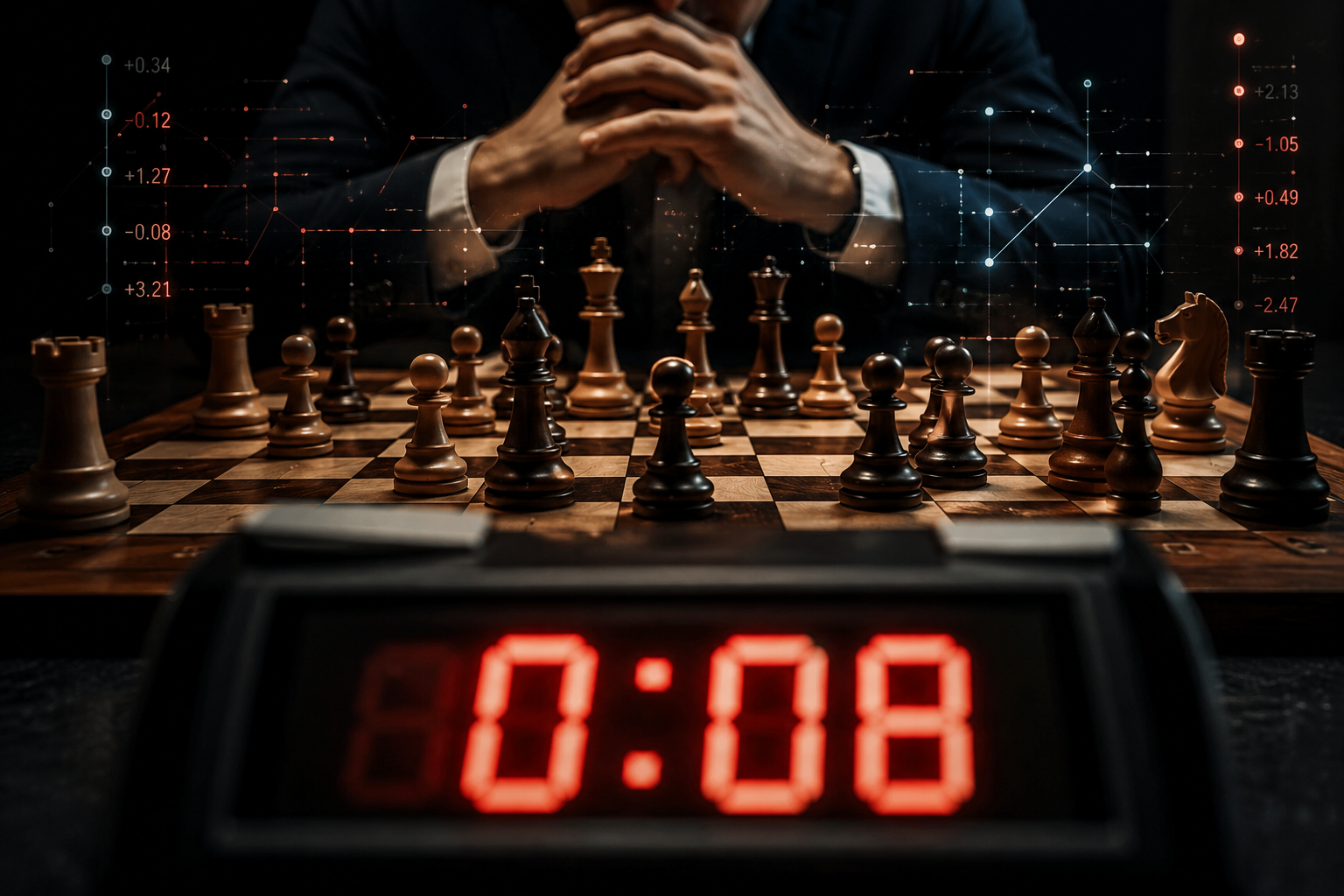
Every chess player knows the feeling. You navigate the opening perfectly. You transition into a solid middlegame. You build a completely fine, perhaps even slightly superior, position. And then, you glance at the clock. Your opponent has 15 minutes left. You have 42 seconds. Panic sets in, the board becomes a blur, your heart rate spikes, and within three moves, you hang a full piece to a basic tactic.
You review the game later, staring at the screen in disbelief. You ask yourself the same question every club player asks: Why do I always get in time trouble in chess?
The standard advice you will find on generic chess forums is to "play faster" or "practice tactics so you calculate quicker." This advice is not only unhelpful; it is fundamentally wrong. Time trouble in chess is rarely a calculation problem. It is an evaluation problem. It is a psychological trap rooted in how human beings perceive quiet, non-forcing positions compared to how artificial intelligence evaluates them.
As we witness the absolute pinnacle of human time management this June 2026 at the Norway Chess tournament and the UzChess Cup in Tashkent, where elite Grandmasters expertly balance deep thought with rapid execution, it is time to address the amateur's worst enemy: the clock.
In this comprehensive, 4000-word masterclass, we are going to dissect the anatomy of time trouble. We will explore exactly why your brain freezes when the position is quiet, how top-tier engines like Stockfish 18 view these "dead" positions, the psychological profiles of chronic time-burners, and the actionable, step-by-step frameworks you must implement to stop losing won games to the clock.
Welcome to the ultimate DeepBlunder guide on mastering chess time management.
Chapter 1: The Anatomy of a Time Leak
To solve a problem, you must first diagnose it correctly. If you record your games and map out your time spent per move, you will likely discover that you do not lose your time linearly. You do not spend exactly two minutes on every move. Instead, you experience "Time Leaks."
A Time Leak is a specific moment in the game where you spend an entirely disproportionate amount of time relative to the objective complexity of the position.
The Paradox of Quiet Positions
The most massive time leaks do not happen in chaotic, tactical slugfests. When the board is on fire, when pieces are hanging, and when there are forcing checks and captures, your brain actually works quite efficiently. You calculate the forcing lines because you have to. The moves dictate themselves.
The real danger lies in the silence. It is exactly why do I play too fast in quiet chess positions that ruins your game. Wait, play too fast? Yes. Many players blitz out the first 10 moves of a quiet opening, reach a completely static middlegame where they lack a plan, and then completely freeze. They realize they are out of their opening prep.
When a position is quiet—meaning there are no immediate pawn breaks, no forcing captures, and no direct threats—the number of "legal and acceptable" moves skyrockets.
You could play
Re1.You could play
h3.You could play
a4.You could reroute a knight.
Because the human brain hates uncertainty, you start trying to calculate which of these purely strategic moves is objectively the "best." You dive down calculating trees that go nowhere. You spend seven minutes deciding whether your rook belongs on e1 or d1.
How Stockfish 18 Views Quiet Positions
Here is what Stockfish 18 sees that you do not: In a truly quiet position, there is no single "best" move, only a cluster of equally viable plans.
If you run a deeply quiet position through the DeepBlunder engine, you will see the evaluation bar look something like this:
1. Re1(+0.45)1. h3(+0.43)1. a4(+0.40)1. Ne2(+0.38)
To a human, these numbers are indistinguishable. To the engine, they are essentially the same evaluation. Stockfish understands that in a closed, maneuvering game, the immediate tactical difference between Re1 and h3 is mathematically negligible over a depth of 30 moves.
When you spend seven minutes choosing Re1 over h3, you are trading 15% of your total game time for an advantage of 0.02 pawns. It is the worst return on investment in chess.
The DeepBlunder Insight: Time vs. Centipawns
At DeepBlunder, our core philosophy is understanding the relationship between human flaws and engine perfection. We use Centipawn Loss (CPL) to measure inaccuracies.
A player with chronic time trouble makes a fundamental error in resource allocation. They refuse to accept a 10-centipawn inaccuracy on move 15, spending 10 minutes to find the "perfect" +0.45 move. Because of this, on move 38, with 12 seconds left on the clock, they blunder a full rook, resulting in a 500-centipawn loss.
You must learn to trade minor centipawn inaccuracies for major time advantages.
Chapter 2: The Psychological Traps of Time Trouble
Time management is deeply psychological. Your clock is a mirror reflecting your insecurities, your lack of preparation, and your fear of losing. Let's break down the psychological profiles that lead to chronic flagging.
Trap 1: The "Phantom Tactic" Syndrome
This is the most common affliction among intermediate players. You have been burned in the past by sudden, devastating tactics. You constantly ask yourself, Why do I keep getting forked in chess? or Why do I miss one-move threats in chess?
Because you carry the trauma of past blunders, you see ghosts. In a position where the opponent's pieces are securely on their first three ranks, you spend four minutes calculating a completely irrational knight sacrifice on f7, just to "make sure it doesn't work."
You are letting the fear of blundering dictate your time usage, searching for defensive resources against threats that the opponent has not even formulated yet.
Trap 2: The "Winning Paralysis"
This is perhaps the most frustrating way to lose on time. You completely outplay your opponent. You are up a clean piece. The engine evaluates the position at +4.50. And suddenly, you stop playing chess.
You begin double and triple-checking every single move. You become terrified of making a mistake. You calculate every desperate, impossible trick your opponent might try. You wonder, Why do I play worse when I'm winning in chess?
You play worse because you shift your mindset from "playing to win" to "playing not to lose." When you play to win, you look for the most active, crushing continuation. When you play not to lose, you look for the safest, most passive continuation, and you burn hours of clock time trying to verify that the passive move is 100% bulletproof. By the time you reach the endgame, your clock is at zero, and you flag in a +5 position. This is the ultimate tragedy of the amateur player, and learning how to stop losing winning positions in chess starts with aggressive, confident time management when ahead.
Trap 3: The "Post-Brilliancy Hangover"
Have you ever found a stunning, engine-approved tactical shot, played it, felt like Magnus Carlsen for exactly one move, and then immediately hung a piece on the very next turn?
Players constantly search our blog for answers to this: Why do I blunder right after finding a good move in chess?
This relates directly to time trouble. Finding that brilliant move often requires immense calculation and time investment. Once you play it, you experience an adrenaline dump and a false sense of security. You assume the game is effectively over. The opponent makes a desperate, resilient reply, and because you are now low on time and emotionally exhausted from your "brilliancy," you blitz out the next move without calculating, throwing the entire game away.
Trap 4: The "Equal Position Agony"
Many players thrive in chaos but collapse in equality. They constantly ask, Why do I keep losing equal positions in chess?
When the material is even, the pawn structure is symmetrical, and the engine says 0.00, these players feel immense pressure to "create" something. Because they do not understand deep strategic maneuvering, they spend half their clock trying to calculate a way to force an advantage out of nothing. They eventually grow frustrated, make an objectively bad, overly aggressive pawn push simply to change the position, and lose. They burned their time and ruined their position simultaneously.
Chapter 3: How Time Trouble Destroys Your Deep Accuracy
We often get questions from DeepBlunder users looking at their post-game stats: Why is my chess accuracy so low?
They look at their game graph and see they played like a Grandmaster for 25 moves, and then their evaluation bar looks like a chaotic heart monitor, plummeting into the red zone.
Time trouble fundamentally alters your cognitive ability to play chess. When you drop below one minute in a complex middlegame (without increment, or with a small increment), you are no longer playing standard chess; you are playing a survival minigame.
Here is exactly what breaks down when the clock ticks down:
1. The Death of the Zwischenzug
A Zwischenzug, or intermediate move, is the hallmark of sophisticated chess. It is the ability to insert a surprising check, capture, or threat before completing an expected sequence.
When you are in time trouble, your brain relies entirely on heuristics (mental shortcuts). If an opponent captures your knight, your heuristic brain immediately says, "Capture back." You do not have the 15 seconds required to look for an intermediate check. This is exactly why you keep missing zwischenzugs in chess. Time pressure forces tunnel vision, limiting your calculations to linear, A-to-B sequences.
2. The Illusion of the Forcing Move
In time trouble, you naturally gravitate towards moves that force a specific reply from your opponent, like checks or obvious threats. It gives you a sense of control and allows you to predict their move, saving you precious seconds.
However, playing bad checks just to save time is a classic amateur mistake. You drive the opponent's king to a safer square, or you develop their pieces for them. Stockfish ruthlessly punishes these "spite checks" with massive centipawn losses.
3. Suspiciously High vs. Depressingly Low Accuracy
Sometimes, players blitz out games and miraculously score a 97% accuracy, leading them to wonder, Is 97% accuracy cheating in chess? Usually, it is not cheating; it simply means they stayed within their memorized opening preparation, the opponent blundered early, and the game ended before time management ever became an issue.
But true accuracy—the ability to maintain a 85%+ score through a grinding 60-move endgame—is impossible without strict, disciplined time management in the first 30 moves.
🔥 STOP THROWING AWAY WON GAMES! 🔥Are you tired of playing brilliant middlegames only to blunder it all away because you have 10 seconds left? Stop guessing what went wrong.
Let our Stockfish 18 AI engine show you exactly where you burned your time and how to fix it.
👉 Analyze 1 of your games for FREE with DeepBlunder ->
Chapter 4: The Strategic Foundations of Fast Play
If you want to stop getting into time trouble, you cannot simply tell yourself to "move faster." You need a systemic change in how you approach the chessboard. Fast play is a byproduct of deep understanding.
Foundation 1: Opening Knowledge That Actually Matters
Many amateurs spend hours memorizing 15 moves deep into the Najdorf Sicilian, but they don't actually understand the resulting middlegame plans. Once they reach move 16, they hit a brick wall and burn 20 minutes trying to figure out what to do.
Understanding how many types of chess opening there are and broadly classifying them (Open, Semi-Open, Closed, Flank) is far more important than memorizing specific computer lines.
If you play the French Defense (a Closed/Semi-Closed opening), you must inherently know that your plan involves attacking the base of the pawn chain (usually d4) and managing your bad light-squared bishop. If you know this plan before the game starts, you don't have to invent it on move 12. You simply execute it, saving massive amounts of time.
Foundation 2: The "Worst Piece" Heuristic
When the position is quiet and you feel the urge to overthink, rely on a simple heuristic championed by Grandmasters: Find your worst piece and make it better.
If you have a knight stranded on a3, and no tactical shots exist on the board, do not spend six minutes looking for a mating attack. Spend 30 seconds calculating a route to reroute that knight to c4 or e3.
Stockfish almost always approves of improving your worst piece in a quiet position. It might not be the objective +0.60 best move, but a +0.45 piece improvement move played in 30 seconds is infinitely better than a +0.60 move played in 10 minutes.
Foundation 3: Recognizing "Critical Moments"
A Grandmaster can play a 40-move classical game using 5 minutes for the first 15 moves, 45 minutes for moves 16-18, and 10 minutes for the rest of the game. Why? Because they recognize a "Critical Moment."
A critical moment is a point in the game where the evaluation can swing drastically, the pawn structure is about to be permanently altered, or a complex tactical sequence is initiated.
You must train yourself to identify these moments.
Not a critical moment: Choosing which rook to put on the open file when both are equally viable. (Spend 15 seconds).
Critical moment: Deciding whether to push a pawn and lock the center forever, or maintain the tension. (Spend 10 minutes).
Amateurs suffer time trouble because they treat every single move as a critical moment. You must learn to conserve your mental energy and clock time for the decisions that actually dictate the outcome of the game.
Chapter 5: The DeepBlunder 5-Step System to Cure Time Trouble
We have developed a specific, actionable framework to help you recalibrate your internal clock. Implement these five steps in your next 20 games, and your time trouble will virtually disappear.
Step 1: The "Two Candidate" Rule
In any non-forcing, quiet position, you are strictly forbidden from analyzing more than two candidate moves.
Scan the board. Pick the two most natural, principled moves that align with your strategic plan (e.g., centralizing a piece, grabbing space, castling).
Analyze Move A. Analyze Move B. Choose the one you prefer and play it. Do not let your eyes wander to Move C, D, or E. By artificially limiting your choices, you bypass the paradox of choice that causes time drains.
Step 2: Set Hard Time Limits per Move Type
You need to establish internal speed limits based on the phase and nature of the game.
Opening/Known Theory: 5 to 10 seconds per move. If you are in your prep, play it.
Obvious Recaptures: 5 to 15 seconds. (Always pause briefly to check for a zwischenzug, but do not agonize).
Quiet Positional Improvements: 30 to 90 seconds.
Critical Tactical Calculations: 3 to 8 minutes (in a rapid/classical time control).
If you catch yourself spending 4 minutes on a quiet positional improvement, you must forcefully break your calculation and physically make the move.
Step 3: Accept the "Good Enough" Move
Perfectionism is a disease in competitive chess. You are not a machine. You will not play the Stockfish #1 choice every time.
If you see a move that improves your position, secures your king, and does not blunder material, play it. The pursuit of the perfect move is the enemy of the good move. An excellent practical player wins games by constantly playing "good enough" moves quickly, putting maximum clock pressure on the opponent to find the "perfect" defensive responses.
Step 4: Play with Increment, but Pretend You Don't Have It
Playing with a time increment (e.g., 10 minutes + 5 seconds per move) is highly recommended for improving players because it prevents games from devolving into meaningless blitz scrambles.
However, a dangerous psychological trap is relying on the increment. Players will burn their clock down to 10 seconds, assuming they can survive the rest of the game on the 5-second increment.
You must treat the increment as an emergency airbag, not as your primary fuel tank. Set a mental floor (e.g., 2 minutes). When your clock hits 2 minutes, you must play as if you are in time trouble, even if you have an increment.
Step 5: The Post-Game "Time Audit" Analysis
This is where DeepBlunder's philosophy truly shines. When you finish a game, do not just look at the blunder that ended it. That blunder is just a symptom. You must perform a Time Audit.
Go to the DeepBlunder Blog methodology and use an engine to review your game. Look specifically at the moves where you spent the most time.
Did you spend 6 minutes on move 14?
What was the evaluation before your move? (+0.3)
What was the evaluation after your move? (+0.2)
When you repeatedly force yourself to face the reality that your 6-minute deep thinks are only producing average, equal moves, your brain will slowly start to let go of the perfectionism. You will realize that your intuition is often just as good as your slow calculation in quiet positions.
Chapter 6: DeepBlunder Case Studies – Find the Time Leak
To truly understand how Stockfish evaluates time trouble, we need to look at specific board scenarios. Let's analyze a few classic archetypes where amateurs bleed their clocks dry, and see what the engine says.
Case Study 1: The Symmetrical Slog
The Position: An Exchange French Defense. Material is equal. The pawn structure is completely symmetrical. White has a rook on e1, Black has a rook on e8.
The Human Action: White spends 8 minutes trying to find a way to break the symmetry and launch an attack on the kingside. They calculate massive knight maneuvers and pawn sacrifices that lead nowhere. Exhausted, they finally play h3.
The DeepBlunder AI Evaluation:Stockfish evaluates the position at exactly 0.00. The top 5 engine choices all maintain a 0.00 evaluation.The Lesson: You cannot force a win out of a dead equal position by thinking harder. When the position is deeply symmetrical and closed, play solid, improving moves rapidly. Wait for your opponent to overpress and create a weakness, then use your time advantage to exploit it.
Case Study 2: The "Ghost" Sacrifice
The Position: Black has a solid Caro-Kann setup. White has a bishop on d3 and a knight on e5, looking aggressively at the kingside, but Black's setup is completely solid. There are no actual tactics.
The Human Action: Black is terrified of a Greek Gift sacrifice (Bxh7+) or a knight sacrifice on f7. Black spends 12 minutes calculating every possible sacrifice White could play, verifying that none of them work. Black eventually plays a passive move like h6 to "prevent" the tactic.
The DeepBlunder AI Evaluation: Stockfish evaluates the sacrifices as -3.00 (losing for White). The threats were never real. By playing h6, Black creates a target and wastes a tempo.
The Lesson: Do not spend time calculating your opponent's bad moves unless they actually play them. Trust your defensive setup.
Case Study 3: The Winning Overthink
The Position: White is up a clear piece in the endgame. Black has no passed pawns and no counterplay.
The Human Action:White has 4 minutes left. Instead of aggressively marching the king up the board, White spends 3 minutes double-checking every single pawn push, terrified of blundering the piece back or allowing a stalemate. White makes a move with 40 seconds left.The DeepBlunder AI Evaluation:White's advantage drops from +6.0 to +4.0 because the move chosen was overly passive.The Lesson: When winning, speed and activity are your best friends. Play natural, centralizing moves. Do not let the fear of a blunder cause the very time trouble that will guarantee one.
Conclusion: Reclaiming Your Clock and Your Sanity
Time trouble is a deeply ingrained habit, but it is entirely curable. It requires you to stop viewing chess as a game of absolute mathematical perfection, and start viewing it as a practical struggle between two humans with limited time and energy.
By understanding the nature of quiet positions, recognizing the psychological traps of fear and perfectionism, and implementing the DeepBlunder time management framework, you can reclaim your clock.
You will no longer look at the evaluation bar and wonder why it collapsed on move 35. You will no longer throw away brilliant middlegames in frantic, 10-second blitz scrambles. You will learn to play like the engines dictate—efficiently, practically, and ruthlessly.
The next time you play, remember: The clock is not your enemy. It is just another piece on the board. Use it wisely, and you will find that your opponents are the ones sweating, flagging, and blundering when the pressure gets too high.
For more insights into the exact engine evaluations of your biggest mistakes, make sure to read our legal terms here, understand our data privacy commitments here, and if you ever need to, manage your account here. But more importantly, keep utilizing the DeepBlunder platform to uncover what Stockfish sees that you don't.
Frequently Asked Questions (FAQ)
1. Why do I always end up in time trouble, even in games where I know the opening well?
Knowing the opening is only the first step. Players often end up in time trouble because they lack a coherent middlegame plan. Once the memorized moves end, they spend massive amounts of time trying to invent a strategic concept from scratch, overthinking quiet positions where multiple moves are equally viable.
2. How can I stop overthinking in quiet, equal chess positions?
Implement the "Two Candidate Rule." When the position lacks forcing tactics, limit your calculation to only two natural, improving moves. Analyze both briefly, pick the one that feels best, and play it. Accept that in quiet positions, minor centipawn inaccuracies will not lose you the game, but losing 10 minutes on the clock definitely will.
3. Does Stockfish evaluate the time I take to play a move?
No, Stockfish evaluates the objective quality of the position on the board, ignoring the clock. However, when you use DeepBlunder to analyze your games, comparing your time usage against the engine's evaluation reveals your "Time Leaks"—moments where you spent 5 minutes on a move that the engine proves was no better than the 10-second alternative.
4. Why does my accuracy drop so significantly when I am low on time?
Time trouble forces you to abandon deep calculation and rely entirely on quick heuristics. You miss intermediate moves (zwischenzugs), fail to spot subtle defensive resources, and play "hope chess" with superficial one-move threats. Maintaining high accuracy requires the time to calculate variations deeply.
5. Is it normal to spend a lot of time when I have a completely winning position?
It is a common psychological trap called "Winning Paralysis." Players become so afraid of blundering their advantage that they over-calculate to ensure absolute safety, paradoxically creating time trouble that leads to the very blunders they feared. When winning, trust your active moves and maintain practical speed.
6. Should I play faster in the opening to save time for the endgame?
You should play the moves you know well quickly, but do not blindly blitz out moves just to save time. Play at a steady, confident pace during your known theory, but be ready to invest time the moment you reach a "critical moment" where the structure permanently changes.
7. How does reviewing my games with AI help my time management?
By reviewing games with DeepBlunder, you connect your subjective feeling of a position with its objective reality. If you repeatedly see that your 8-minute deep-thinks result in +0.0 evaluations, your brain will gradually learn to stop wasting time in dead, quiet positions, improving your practical decision-making speed.
From the same category
Keep reading
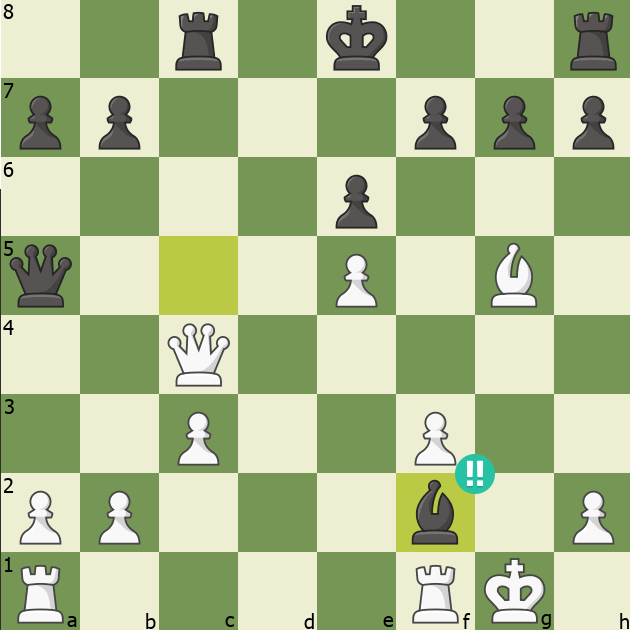
Brilliant Chess Move: Stunning Bishop Sacrifice Led to Checkmate
Most chess players have experienced it at least once. You spot a free pawn, win some material, and feel confident about your position—only to discover that your opponent had seen something much deeper.

Why Your Chess Accuracy Drops After Move 15
If your chess accuracy drops after move 15, the problem is not that you suddenly become a worse player. The problem is that the game has shifted from memory to understanding, and you have not trained that transition enough.
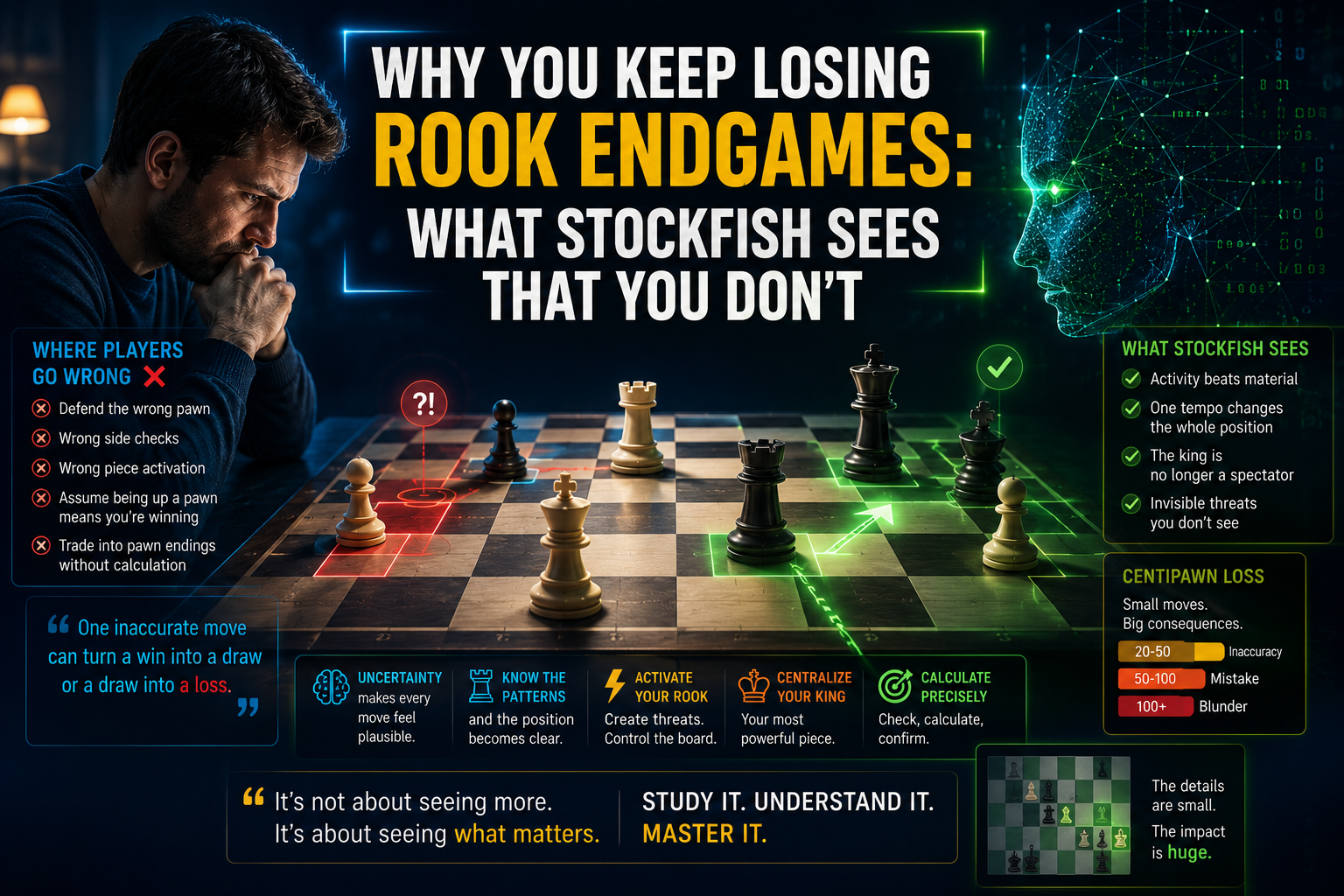
Why You Keep Losing Rook Endgames: What Stockfish Sees That You Don’t
If you keep losing rook endgames, the issue is usually not talent. It is pattern recognition. Once you learn to see what Stockfish sees, your endgames stop feeling random.