European Individual Chess Championship 2026 on April 15: Round 7 Standings, General Recap
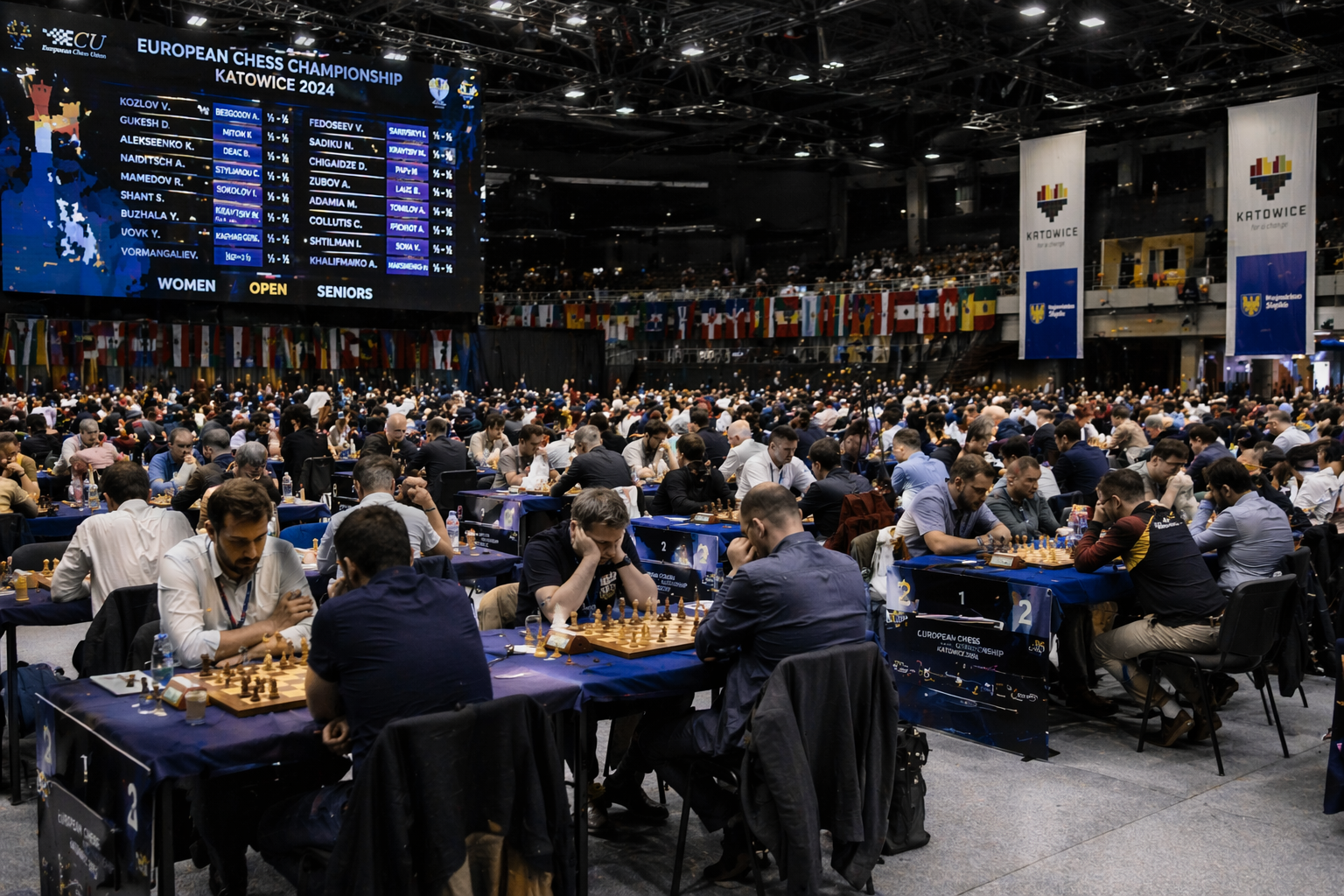
The European Individual Chess Championship 2026 is being played in Katowice, Poland, from April 6 to April 20, and the event uses an 11-round Swiss format with classical time control.
Official event information lists 501 players in the field, a €100,000 prize fund, and qualification spots for the next FIDE World Chess Cup, which explains why the tournament always feels both huge and unforgiving.
As of the latest indexed standings available on April 15, seven of the eleven rounds have been completed, and Vignir Vatnar Stefansson stands alone in first place on 5.5/7.
The wider picture is just as important as the headline. Robert Hovhannisyan, Isik Can, Jonas Buhl Bjerre, and Aydin Suleymanli are all listed on 5.0/7, which means the event still has a compact lead group rather than a runaway favorite.
That is exactly what a major Swiss tournament tends to produce: not certainty, but tension.
General recap
The championship opened with the usual European Championship mix of depth, danger, and instability. A field of more than 500 players means that every early upset changes not only one score table, but dozens of future pairings and tie-break paths.
That effect showed up quickly in Katowice. An ECU update after five rounds reported that no player remained on a perfect score and that six players were tied for first on 4.5/5.
In other words, the tournament resisted control from the beginning.
By the latest indexed standings snapshot, that early congestion has narrowed, but only slightly. Stefansson leads on 5.5/7, while four players share the next score tier on 5.0/7.
That is not a commanding lead in an eleven-round Swiss; it is a useful edge, but still a fragile one.
With four rounds left after this snapshot, one decisive day could still reorder the whole race.
Standings after Round 7
The latest indexed ChessManager standings page lists the following top positions after seven rounds.
Current standings
Vignir Vatnar Stefansson — 5.5/7
Robert Hovhannisyan — 5.0/7
Isik Can — 5.0/7
Jonas Buhl Bjerre — 5.0/7
Aydin Suleymanli — 5.0/7
Those standings are also broadly consistent with the previous public snapshot reported by The Week in Chess, which listed Stefansson first on 5.5 and Hovhannisyan and Can on 5.0 among the leaders.
That consistency matters because it suggests Stefansson’s rise is not a one-round accident but part of a steady run through the middle of the event.
Even so, the lead remains small enough that one draw in the wrong moment or one loss on a top board could change everything.
A separate player page shows Eduardo Iturrizaga on 5.0 points and in 6th place, which is another sign of how crowded the chase pack remains.
This is one of the defining features of a strong Swiss: players who would headline a smaller event can sit just outside the top five and still be very much alive.
Match trend recap
Because giant Swiss tournaments produce so many simultaneous games, the best way to understand the event is to track trend lines rather than only isolated results. The early rounds created a large lead group, the middle rounds began to sort that group, and the latest indexed standings now show Stefansson as the player who has converted chaos into a small but valuable advantage.
That is the clearest overall pattern in Katowice right now.
Important early turning points
After five rounds, no player remained on a perfect score and six players shared first place on 4.5/5.
In Round 5, Eduardo Iturrizaga drew Robert Hovhannisyan on one of the key top boards.
In the same round, Lorenzo Lodici defeated Giga Quparadze, a result that reinforced the strong early Italian presence in the event.
Also in Round 5, Vignir Vatnar Stefansson beat Aleksandar Indjic, a result that fits the profile of a player building a serious campaign rather than just surfing early momentum.
Sabino Brunello drew Jonas Buhl Bjerre in Round 5, keeping another Italian name relevant on the higher boards during the opening phase.
These details help explain why the standings look the way they do now. Hovhannisyan has remained close to the top group for several days, Stefansson converted a strong middle stretch into sole first, and Iturrizaga remains close enough to matter even while sitting outside the current top five.
That is a very Swiss-looking leaderboard: compressed, flexible, and dangerous for anyone who relaxes too early.
The Italian angle
For Italian readers, this tournament still offers several points of interest. Lorenzo Lodici’s Round 5 win over Quparadze and Sabino Brunello’s Round 5 draw with Bjerre confirmed that Italian players were not just present in Katowice but active on meaningful boards.
That matters because the European Championship is often where national stories become as engaging as the overall title race.
At the same time, the latest indexed top five no longer includes an Italian player, which shows how hard it is to hold position in a tournament of this size.
A player can be one strong day away from board one and one bad day away from disappearing into the crowd. That volatility is not a flaw of the format; it is the format.
What the standings really mean
Stefansson’s 5.5/7 is a good lead, but it is not a winning lead yet. In an eleven-round Swiss with this many strong players, the leader still has to survive harder pairings, sharper preparation, and increasing tie-break pressure.
The more useful reading of the table is that Katowice now has a visible front-runner, but not a protected one.
That distinction is essential.
Hovhannisyan, Can, Bjerre, and Suleymanli are all within half a point, and Iturrizaga is only one more half-point behind them on the separate player page.
That means the lead pack is still broad enough for a single round to flip the order.
This is why the European Championship often becomes more interesting in rounds eight through ten than it is at the start.
Want to save key positions from Katowice, check missed tactics, and compare your own evaluations with engine lines? Try DeepBlunder and browse more tournament coverage on the DeepBlunder blog.
Official links
Readers who want to follow the event through official channels can use the official EICC 2026 website and the official tournament listing on Chess-Results.
For broader tournament context, the FIDE event announcement remains the clearest official summary of the field size, prize fund, and World Cup qualification stakes.
Conclusion
The European Individual Chess Championship 2026 still looks exactly like a major Swiss should look on April 15: crowded, unstable, and full of plausible winners. The latest indexed standings show Vignir Vatnar Stefansson in first on 5.5/7, with Robert Hovhannisyan, Isik Can, Jonas Buhl Bjerre, and Aydin Suleymanli all within half a point.
That is enough to create a real frontrunner, but not enough to create safety. With four rounds still to play after this standings snapshot and a tightly packed chase group behind the leader, Katowice remains open enough for the final weekend to reshape both the podium and the qualification picture.
FAQ
Who is leading the European Individual Chess Championship 2026 on April 15?
The latest indexed standings list Vignir Vatnar Stefansson in first place on 5.5/7.
Who are the closest chasers?
Robert Hovhannisyan, Isik Can, Jonas Buhl Bjerre, and Aydin Suleymanli are all listed on 5.0/7.
Is Eduardo Iturrizaga still in contention?
Yes. A separate player page lists Eduardo Iturrizaga on 5.0 points and in 6th place, which keeps him very close to the leaders.
Where is the tournament being played?
The event is being held in Katowice, Poland.
How many players are in the event?
Official information lists 501 participants.
From the same category
Keep reading
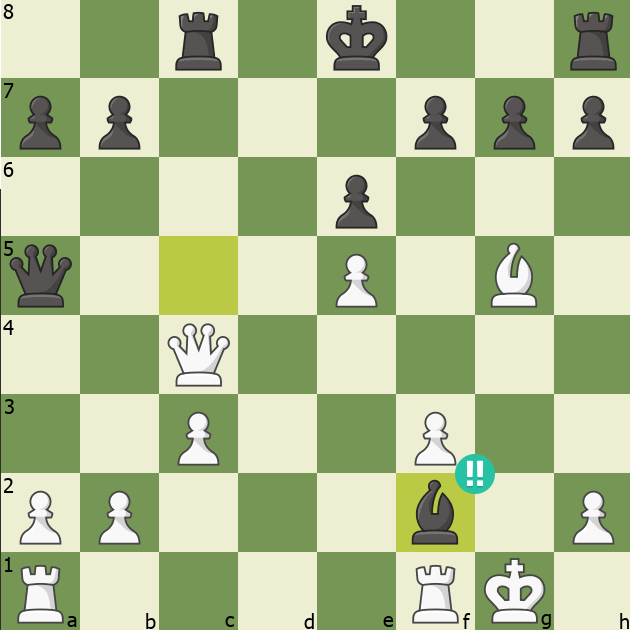
Brilliant Chess Move: Stunning Bishop Sacrifice Led to Checkmate
Most chess players have experienced it at least once. You spot a free pawn, win some material, and feel confident about your position—only to discover that your opponent had seen something much deeper.

Why Your Chess Accuracy Drops After Move 15
If your chess accuracy drops after move 15, the problem is not that you suddenly become a worse player. The problem is that the game has shifted from memory to understanding, and you have not trained that transition enough.

Why You Always Get in Time Trouble (And How Stockfish 18 Fixes It)
Every chess player knows the feeling. You navigate the opening perfectly. You transition into a solid middlegame. You build a completely fine, perhaps even slightly superior, position. And then, you glance at the clock. Your opponent has 15 minutes left. You have 42 seconds. Panic!