European Individual Chess Championship 2026 Update on April 17
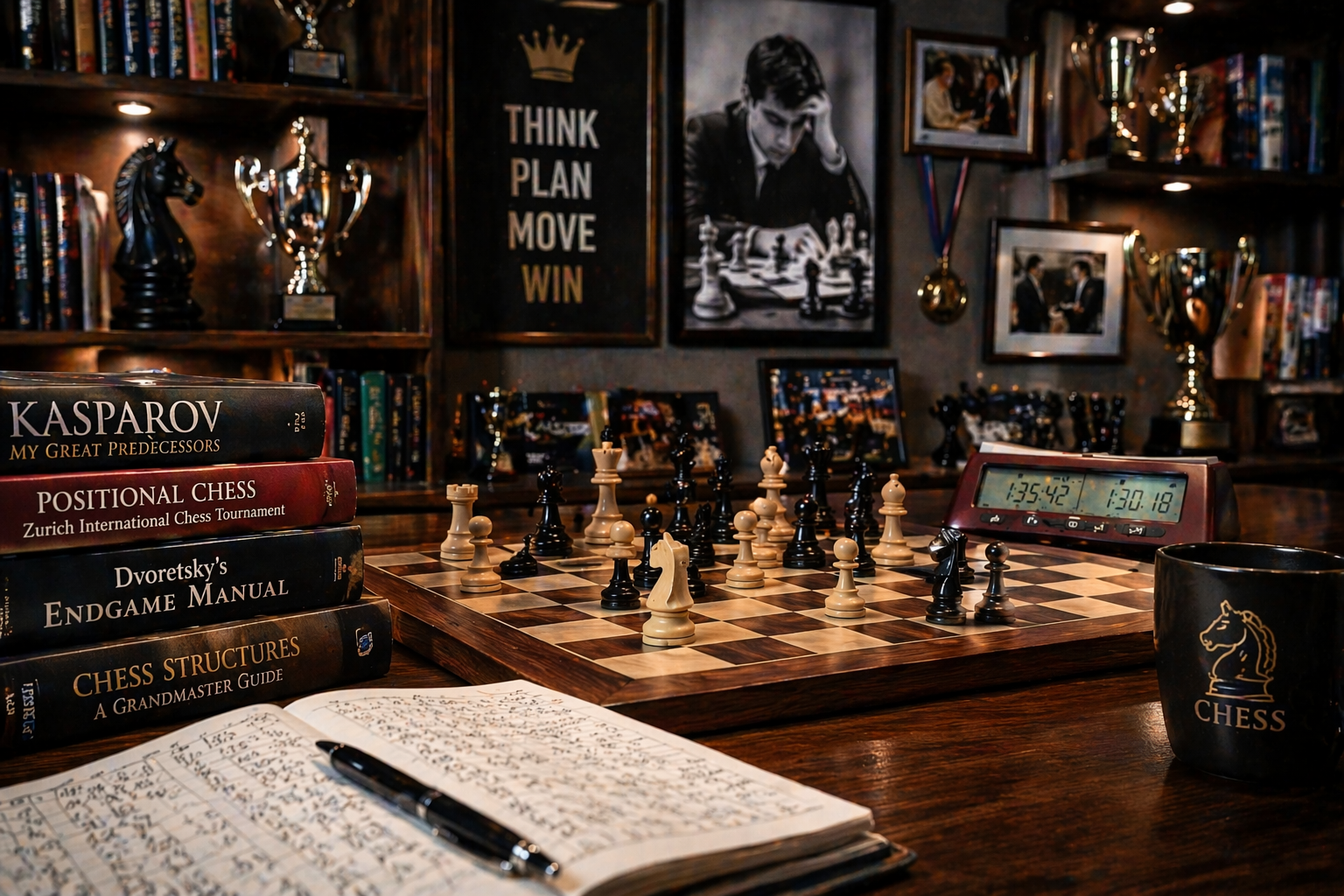
The European Individual Chess Championship 2026 is being played in Katowice from April 6 to April 20 as an 11-round Swiss tournament with a classical time control of 90 minutes for 40 moves, followed by 30 minutes to the finish and a 30-second increment from move one. Official tournament information also confirms a massive international field and shows that the event listing had been updated through “Rank after Round 9” on April 16 at 21:00:56, which means the championship entered its final two-round stretch by April 17.
That checkpoint is exactly where the European Individual Chess Championship 2026 becomes hardest to predict. In a giant Swiss, the final rounds usually compress the standings, strengthen tie-break pressure, and keep a wider pool of contenders alive much longer than in a closed round-robin. So unlike a tournament with one dominant leader, Katowice still feels open, volatile, and strategically crowded.
European Individual Chess Championship 2026 format and stakes
European Individual Chess Championship 2026 format in Katowice
The official listing identifies the event as an 11-round Swiss tournament in Katowice, running from April 6 to April 20 under classical FIDE time control. That structure matters because Swiss events do not eliminate uncertainty early; they create wave after wave of tougher pairings as the leaders keep meeting stronger opposition. In practical terms, even players outside the top few boards can still jump back into relevance with one strong round and favorable pairings.
European Individual Chess Championship 2026 qualification and prize stakes
Official coverage describes the championship as a major continental event with a €100,000 prize fund and qualification places for the next FIDE World Cup. Those stakes make the tournament important even beyond the race for first place, because players near the top boards are often fighting for title placement, prize money, and qualification value at the same time. That is one reason the event tends to stay tense deep into the second half.
European Chess Championship 2026 standings after Round 9
European Chess Championship 2026 Round 9 checkpoint
The most reliable official checkpoint available on April 17 comes from the Chess-Results page, which shows the event updated on April 16 at 21:00:56 and explicitly lists “Rank after Round 9” among the available tournament views. Even when the publicly exposed text does not display a full top-ten table directly in the listing, that update confirms the tournament had already crossed into the last two rounds. At that point, the race is no longer about early promise but about conversion under pressure.
European Chess Championship 2026 standings snapshot before Round 9
The clearest public standings snapshot exposed in indexed sources before the Round 9 checkpoint showed Vignir Vatnar Stefansson in first place on 5.5/6, with Robert Hovhannisyan, Isik Can, Jonas Buhl Bjerre, and Aydin Suleymanli among the main chasers on 5/6. A later public snapshot after seven rounds continued to show Stefansson first on 5.5/7, with Hovhannisyan, Can, Bjerre, and Suleymanli still close behind on 5.0/7. Taken together, those snapshots suggest the leader built the strongest first half, but not a decisive cushion.
European Chess Championship 2026 leaderboard snapshot
Vignir Vatnar Stefansson — 5.5/7 in the latest clearly exposed public standings snapshot.
Robert Hovhannisyan — 5.0/7.
Isik Can — 5.0/7.
Jonas Buhl Bjerre — 5.0/7.
Aydin Suleymanli — 5.0/7.
This snapshot still matters on April 17 because it captures the shape of the title race before the official event listing moved to the Round 9 stage. It shows one visible front-runner, but not a runaway winner. In a Swiss with only half-point gaps near the top, that is exactly the kind of table that can still be reordered late.
European Individual Chess Championship 2026 Round 9 pairings and contenders
European Individual Chess Championship 2026 top boards in Round 9
The Round 9 pairings page is useful because top-board traffic often reveals who is still realistically part of the race. Among the leading boards were Aydin Suleymanli vs David Anton Guijarro, Ediz Gurel vs Roman Dehtiarov, Nikolozi Kacharava vs Maxime Lagarde, and Nijat Abasov vs Benny Aizenberg. The same pairing list also placed Jonas Buhl Bjerre on Board 10 and Lorenzo Lodici on Board 18, which shows how broad the competitive front remained entering the closing phase.
European Individual Chess Championship 2026 contender pool remains wide
This top-board spread tells us two things. First, the European Individual Chess Championship 2026 had not narrowed into a simple two-player duel by Round 9. Second, several strong players from different rating bands were still circulating through the most relevant pairings, which is a classic sign of an unstable late Swiss rather than a settled championship.
European Individual Chess Championship 2026 trends and key storylines
European Individual Chess Championship 2026 trend line from Round 5 to Round 9
The event resisted a clean hierarchy early. ECU reporting noted that after five rounds there were multiple players tied for first on 4.5/5 and no perfect score, which immediately signaled a compact and unsettled leaderboard. By Round 6, Stefansson had emerged as sole leader on 5.5/6, but FIDE still described the tournament as wide open with five rounds remaining.
Vignir Vatnar Stefansson in the European Individual Chess Championship 2026
Stefansson’s importance in this tournament comes from timing as much as score. He was the first player to turn the crowded early rounds into a visible solo lead, which gave him narrative momentum and put everyone else in catch-up mode. Still, the standings around him remained compact enough that his lead looked significant rather than safe.
Italian players in the European Individual Chess Championship 2026
For an Italian readership, the event has stayed relevant beyond the pure title fight. Chess-Results confirms that Lorenzo Lodici, Luca Moroni Jr, and Sabino Brunello were all part of the field, and the Round 9 pairings placed Lodici on Board 18, which indicates he was still moving in the stronger section of the event late into the tournament. In a 501-player Swiss, that kind of placement matters because it shows continuing relevance near the high-pressure boards, even without a confirmed podium position yet.
Want to save the sharpest positions from the European Individual Chess Championship 2026, review critical tactical moments from Katowice, and compare your own decisions with engine-backed analysis instead of relying only on final standings? Try DeepBlunder, a practical chess analysis tool built for players who want to study faster and understand positions more deeply. Then keep following tournament coverage, opening breakdowns, and chess news on the DeepBlunder blog, where major events like the European Championship are turned into readable, training-friendly recaps.
Why the European Chess Championship 2026 race is still open
At this stage, the biggest story is not one inevitable champion but the structure of the remaining fight. The official framework confirms an 11-round Swiss, and that format naturally increases the chance of clustered final scores and tie-break battles among players who may finish on the same number of points. In other words, raw points matter, but opposition strength and pairing history can become almost as important once the event reaches the last rounds.
European Individual Chess Championship 2026 final phase in Katowice
That is why the championship feels alive on April 17. The official page confirms the tournament is already through the Round 9 checkpoint, while the latest clearly exposed standings snapshots still point to a compact lead pack rather than total control by one player. This is the most interesting phase of a Swiss: late enough for every result to hurt, but still early enough for multiple endings to remain plausible.
Useful links
Official event site: European Individual Chess Championship 2026
Official tournament listing: Chess-Results
Round 9 pairings: ChessManager Round 9
FIDE coverage: European Championship 2026 halfway report
Internal link: DeepBlunder
Internal link: DeepBlunder Blog
Conclusion
On April 17, the European Individual Chess Championship 2026 is defined more by tension than by closure. Katowice has already reached the Round 9 checkpoint, but the exposed standings trend still points to Stefansson as the player who built the best early platform rather than a champion who has already separated decisively. With two rounds left in an 11-round Swiss, the race remains open, the top boards remain crowded, and the final result still looks highly sensitive to one strong or weak day.
FAQ
Where is the European Individual Chess Championship 2026 being played?
The European Individual Chess Championship 2026 is being played in Katowice, Poland. That location is confirmed by the official tournament listing, which also gives the event dates as April 6 to April 20. For SEO and clarity, it is worth naming both the city and country in the article because many users search for “Katowice chess tournament” rather than the full official event title.
What format does the European Individual Chess Championship 2026 use?
The tournament uses an 11-round Swiss-system format with classical time control. More specifically, the official listing gives the time control as 90 minutes for 40 moves, then 30 minutes to finish, with a 30-second increment from move one. That format is one of the main reasons the standings remain fluid so deep into the event, because Swiss tournaments keep re-pairing strong scorers instead of narrowing immediately to one or two leaders.
How many players are competing in the European Individual Chess Championship 2026?
Official event coverage describes the field as 501 players, which is enormous even by the standards of a major continental championship. A field of that size changes the character of the tournament because every upset affects both points and future pairings, while tie-break calculations become more important as the event approaches its final rounds. In practical terms, that means the leaderboard can look crowded for much longer than in a smaller elite event.
What is the latest official update available on April 17?
The clearest official checkpoint available on April 17 is the Chess-Results page, which shows the tournament was updated on April 16 at 21:00:56 and includes “Rank after Round 9” among the available standings views. That is important because it confirms the event had already entered its last two rounds by the time of your article update. Even if a public snippet does not expose every top score in one place, that timestamp and tournament state are enough to say with confidence that Katowice had moved into the decisive final phase.
Who was leading the European Individual Chess Championship 2026 in the latest clearly exposed standings snapshot?
The latest clearly exposed public standings snapshot showed Vignir Vatnar Stefansson in first place on 5.5/7. Earlier official FIDE coverage also identified him as sole leader on 5.5/6 at the halfway mark, which supports the same broader reading of the tournament: he built the most coherent first-half campaign. That does not mean he had the event under full control, but it does mean he was the most visible frontrunner before the Round 9 checkpoint was officially logged.
Who were the main chasers behind Stefansson?
The closest pursuers in the latest clearly exposed standings snapshot were Robert Hovhannisyan, Isik Can, Jonas Buhl Bjerre, and Aydin Suleymanli, all listed on 5.0/7. Earlier FIDE coverage also grouped several of those names among the principal second-place pack when Stefansson first moved into sole lead after Round 6. This matters because it shows the chase was not built around one rival alone; it was a broader cluster, which is exactly the sort of structure that keeps a late Swiss unstable.
Why does Round 9 matter so much in the European Individual Chess Championship 2026?
Round 9 matters because it is the checkpoint where an 11-round Swiss moves from sorting players to forcing final conversion. With only two rounds left, every result near the top now has direct implications for podium chances, qualification ambitions, and tie-break strength. In a huge open event, this is often the moment when the standings become both more meaningful and more deceptive at the same time, because a half-point gap can look large in the table while still being fragile in practice.
From the same category
Keep reading
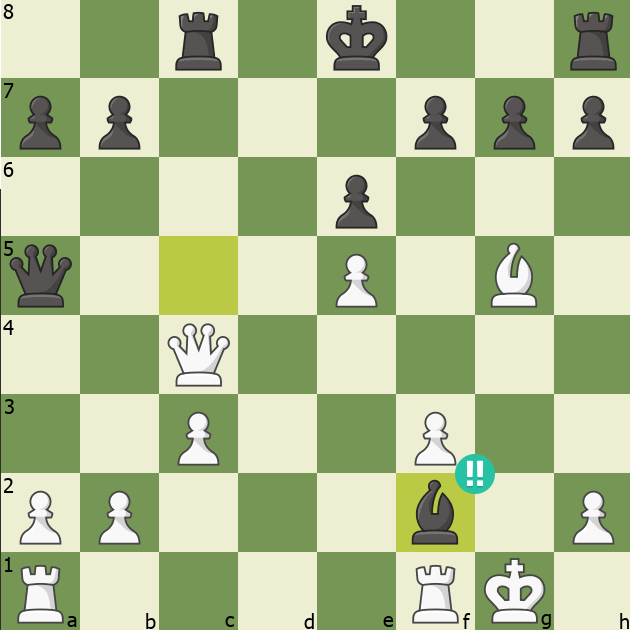
Brilliant Chess Move: Stunning Bishop Sacrifice Led to Checkmate
Most chess players have experienced it at least once. You spot a free pawn, win some material, and feel confident about your position—only to discover that your opponent had seen something much deeper.

Why Your Chess Accuracy Drops After Move 15
If your chess accuracy drops after move 15, the problem is not that you suddenly become a worse player. The problem is that the game has shifted from memory to understanding, and you have not trained that transition enough.

Why You Always Get in Time Trouble (And How Stockfish 18 Fixes It)
Every chess player knows the feeling. You navigate the opening perfectly. You transition into a solid middlegame. You build a completely fine, perhaps even slightly superior, position. And then, you glance at the clock. Your opponent has 15 minutes left. You have 42 seconds. Panic!