FIDE Candidates 2026 on April 15: Sindarov Secures First Place
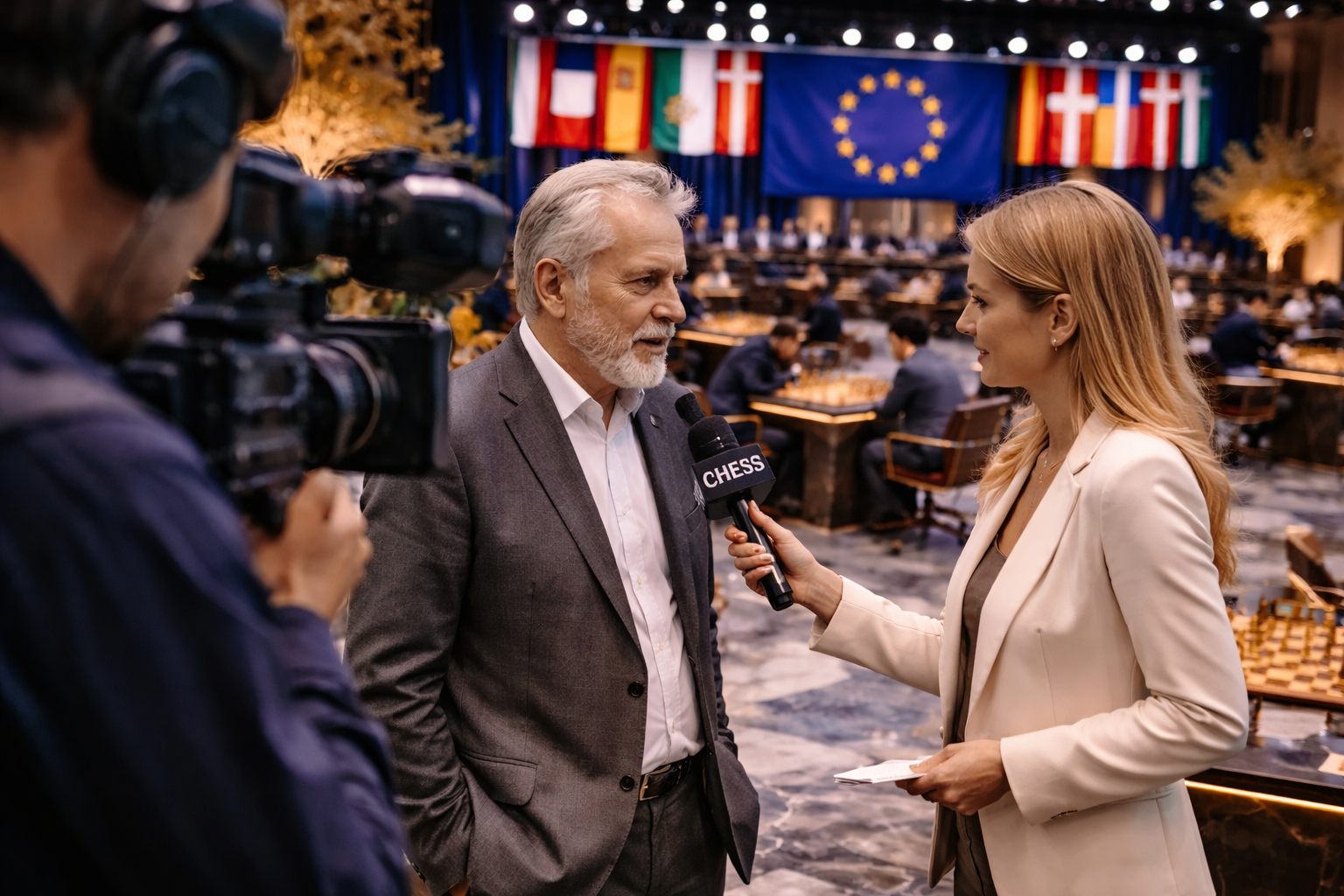
The 2026 FIDE Candidates is being played in Cyprus from March 28 to April 16, and the tournament uses a 14-round double round-robin format to decide the challenger for the next World Championship match.
As of April 15, the biggest headline is no longer just that Javokhir Sindarov leads the event, but that he has already secured first place before Round 14 begins.
Round 13 did not produce a dramatic late collapse, a miracle comeback, or a last-second swing at the top; instead, it confirmed that Sindarov has been the strongest and most consistent player in the field.
General recap
At this stage of the tournament, the story is remarkably clear. Sindarov built his campaign on early wins against direct rivals, then managed the middle and late rounds with the kind of calm that usually wins elite events.
He beat Andrey Esipenko in Round 1, Praggnanandhaa in Round 3, Fabiano Caruana in Round 4, Hikaru Nakamura in Round 5, Wei Yi in Round 6, and Praggnanandhaa again in Round 10.
That sequence gave him the cushion that everyone else spent the second half of the event trying to erase.
Anish Giri deserves real credit for keeping the event alive longer than many expected. He recovered from an opening-round loss to Praggnanandhaa and later scored important wins against Esipenko in Round 4, Praggnanandhaa in Round 8, and Caruana in Round 9.
Still, Giri never managed to cut deeply enough into Sindarov’s lead, and his Round 13 draw in the direct showdown left the tournament effectively decided.
Fabiano Caruana and Hikaru Nakamura had stretches where they looked capable of making a push, but neither found the sustained momentum needed to turn the standings upside down.
Standings after Round 13
Using the official Round 13 results together with the Round 12 standings, the leaderboard after thirteen rounds looks like this.
Current standings
Javokhir Sindarov — 9.5/13
Anish Giri — 7.5/13
3=. Fabiano Caruana — 6.5/13
3=. Wei Yi — 6.5/13
Hikaru Nakamura — 6.0/13
Matthias Bluebaum — 5.5/13
6. Praggnanandhaa R — 5.0/13
Andrey Esipenko — 4.5/13
The arithmetic now matters more than the mood. Sindarov moved from 9/12 to 9.5/13 by drawing Giri in Round 13, while Giri moved from 7/12 to 7.5/13, which means the gap remains two full points with only one round left.
Because Giri can reach only 8.5/14 and the rest of the field can finish even lower, Sindarov has already secured first place regardless of what happens in the final round.
That turns Round 14 from a title-decider into a confirmation round for a tournament that has already found its winner.
Round 13 recap
Round 13 was the last realistic chance for the field to create chaos, but instead it strengthened the existing order. The key result was Anish Giri’s draw with Javokhir Sindarov, a result that worked perfectly for the tournament leader.
Wei Yi defeated Andrey Esipenko, Hikaru Nakamura drew Matthias Bluebaum, and Fabiano Caruana drew Praggnanandhaa.
In practical terms, that meant nobody behind Sindarov made enough progress to keep the title race open.
Main games
Anish Giri 1/2-1/2 Javokhir Sindarov: the most important result of the round, because it mathematically protected Sindarov’s lead and ended the title race.
Wei Yi 1-0 Andrey Esipenko: a strong late result that lifted Wei Yi into a tie for third place on 6.5/13.
Hikaru Nakamura 1/2-1/2 Matthias Bluebaum: a solid but insufficient result for Nakamura, who needed full points to retain even an outside chance.
Fabiano Caruana 1/2-1/2 Praggnanandhaa R: the draw officially ended Caruana’s fading hopes of a late comeback.
The round felt almost symbolic. Giri had the direct meeting he needed, but Sindarov never gave him the opening required for a true reset.
That has been the defining feature of Sindarov’s event: once he reached the lead, he forced everyone else to play on his terms.
How Sindarov won it
Every Candidates winner needs at least one decisive run, and Sindarov had several. The most important phase came from Rounds 3 to 6, when he defeated Praggnanandhaa, Caruana, Nakamura, and Wei Yi across four rounds.
Those were not soft points against the bottom of the table; they were direct blows against elite opponents who began the event with realistic ambitions of winning the tournament themselves.
Once that run was complete, the standings started bending around him.
Another important detail is that Sindarov avoided the kind of late wobble that often destroys great Candidates campaigns. After building the lead, he drew Giri in Round 7, Esipenko in Round 8, Bluebaum in Round 9, Caruana in Round 11, Nakamura in Round 12, and Giri again in Round 13.
Those results may look quiet on paper, but in context they were highly practical.
He did not need fireworks once he had the edge; he needed control, and he found it.
Final-round outlook
Round 14 pairings are already set: Andrey Esipenko vs Fabiano Caruana, Praggnanandhaa vs Hikaru Nakamura, Matthias Bluebaum vs Anish Giri, and Javokhir Sindarov vs Wei Yi.
The title is settled, but the final round still matters for finishing positions, rating impact, and the narrative of how the chasing players close the event.
Giri can still confirm a strong second place, while Caruana and Wei Yi can still fight over the final podium order.
From a storytelling angle, Sindarov vs Wei Yi is still the board everyone will watch. Not because first place is undecided, but because it is the champion’s final classical game of a breakthrough Candidates run.
If he finishes with another controlled result, the shape of the tournament will look even cleaner in retrospect.
Why this result matters
The Candidates always tests more than opening preparation. It tests emotional stamina, recovery after bad rounds, risk management, and the ability to convert a lead without panicking. That is exactly where Sindarov separated himself from the field.
His wins were big enough to create distance, and his draws were timed well enough to prevent the event from slipping back into uncertainty.
That is usually the profile of a deserved winner.
For the rest of the field, the lessons are different. Giri showed excellent resilience after a poor start, Caruana had strong moments without the finishing burst, and Nakamura never truly found a decisive stretch after his opening-round loss to Caruana.
Those are small margins, but the Candidates is built on small margins.
Want to revisit the critical turning points from Sindarov’s wins and compare your own evaluations with engine suggestions? Try DeepBlunder and explore more tournament analysis on the DeepBlunder blog.
Official links
For readers following the closing stage of the event, the most useful sources are the official FIDE Candidates website and the official pairings and results page.
Those pages contain the complete round-by-round schedule, results, and final-round pairings.
Conclusion
On April 15, the main question around the FIDE Candidates 2026 has already been answered. Javokhir Sindarov has secured first place before the final round, and he did it the convincing way: by beating several direct rivals early, protecting his lead under pressure, and refusing to give the chasing pack the tactical mess it needed.
That makes the last round important, but no longer transformative. The title race is over, the hierarchy is clear, and the event will now be remembered as the tournament where Sindarov turned promise into proof.
FAQ
Who has won the FIDE Candidates 2026?
Javokhir Sindarov has already secured first place after Round 13, with 9.5/13 and a two-point lead over Anish Giri with only one round remaining.
What happened in Round 13?
Wei Yi beat Andrey Esipenko, Giri drew Sindarov, Nakamura drew Bluebaum, and Caruana drew Praggnanandhaa.
Why did the Giri-Sindarov draw decide the tournament?
The draw moved Sindarov to 9.5/13 and Giri to 7.5/13, leaving a two-point gap with only one round left, so no one can catch the leader.
What is the final-round pairing for Sindarov?
In Round 14, Javokhir Sindarov plays Wei Yi.
From the same category
Keep reading
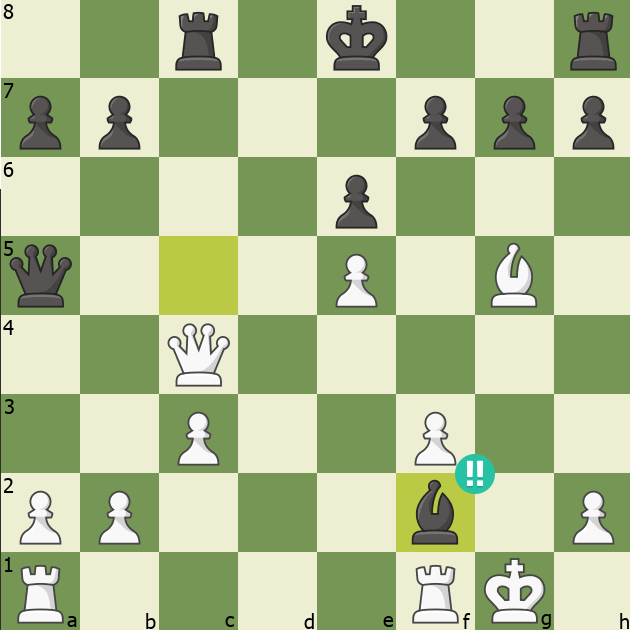
Brilliant Chess Move: Stunning Bishop Sacrifice Led to Checkmate
Most chess players have experienced it at least once. You spot a free pawn, win some material, and feel confident about your position—only to discover that your opponent had seen something much deeper.

Why Your Chess Accuracy Drops After Move 15
If your chess accuracy drops after move 15, the problem is not that you suddenly become a worse player. The problem is that the game has shifted from memory to understanding, and you have not trained that transition enough.

Why You Always Get in Time Trouble (And How Stockfish 18 Fixes It)
Every chess player knows the feeling. You navigate the opening perfectly. You transition into a solid middlegame. You build a completely fine, perhaps even slightly superior, position. And then, you glance at the clock. Your opponent has 15 minutes left. You have 42 seconds. Panic!