How the FIDE Freestyle Chess World Championship Works in 2026: Format, Players, and Why It Matters

How the FIDE Freestyle Chess World Championship Works in 2026
Modern chess is having one of those rare moments when the game still feels old and new at the same time. The traditions remain intact, the classics still matter, the world title still carries its enormous symbolic weight, and yet the elite scene is clearly experimenting with formats that are faster, more watchable, and more open to creativity.
That is exactly why so many players and fans have started paying attention to freestyle chess. It does not reject chess history. It simply removes one of the most exhausting parts of modern elite preparation: endless opening memorization. In freestyle chess, players still need calculation, judgment, coordination, endgame technique, and courage. What disappears is the comforting idea that everything meaningful has already been analyzed before the game even begins.
In 2026, that shift stopped being a side story and became a headline. On January 7, 2026, FIDE and Freestyle Chess announced the first official FIDE Freestyle Chess World Championship, with the over-the-board final stage held in Weissenhaus, Germany, from February 13 to 15. That move gave freestyle chess more than attention; it gave it legitimacy.
For readers, this creates a very natural question: how does the FIDE Freestyle Chess World Championship actually work in 2026? That is the question this article answers, but not in a dry rules-only way. We are also going to look at why the event matters, which players are naturally suited to it, what club players can learn from it, and why this format may become one of the most useful lenses through which to understand modern chess.
There is another reason this topic is worth covering now. DeepBlunder has already built topical relevance around elite events such as the Candidates and the European Individual Championship, which makes freestyle a smart expansion rather than a random detour. In plain terms, this is the kind of topic that can attract fresh readers while still fitting the identity of a serious chess site.
Why the FIDE Freestyle Chess World Championship 2026 Matters
The biggest reason the event matters is simple: freestyle chess is no longer just a fun variant sitting on the edge of the professional scene. With FIDE involved, it entered the official conversation in a much more serious way.
That matters because elite chess is not only about who plays well. It is also about which formats institutions choose to recognize. Once a governing body helps frame a title as a legitimate world championship, the public starts to treat the event differently. Journalists cover it differently. Players prepare differently. Fans discuss it differently. Search demand changes too.
There is also a deeper chess reason. At the highest level, opening preparation has become so extensive that many games begin with a huge amount of knowledge already loaded into both players’ minds. That can still produce brilliant chess, of course, but it can also make the early phase of the game feel less human than many fans would like. Freestyle changes that mood immediately. From move one, strong players are forced to solve fresh problems over the board.
That freshness is hard to fake. When the starting position changes, the game feels alive in a different way. Even viewers who are not experts can sense it. You do not need to know a thirty-move Najdorf file to understand that both sides are searching, improvising, and adapting in real time.
The broader 2026 chess environment also helps explain why this event lands at the right moment. The FIDE Circuit for 2026 and 2027 was updated with a two-year cycle, twelve best results counting toward the ranking, an Open Circuit sub-ranking, and revised treatment of rapid, blitz, and tournament strength. In other words, high-level chess is already being reorganized structurally, so freestyle arrives in a year when the sport is unusually open to new formats and new pathways.
Why the FIDE Freestyle Chess World Championship 2026 Feels Different From Classical Events
A classical super-tournament usually begins from familiar terrain. Even when players choose rare lines, they are still working inside a map built by decades of theory. Freestyle chess changes the map before the clock even starts.
The result is not chaos. That is an important point. Freestyle chess is not random in the sense of being meaningless. The pieces still obey the same logic. Development still matters. Central control still matters. King safety still matters. Good players still look like good players. The difference is that they need to prove their understanding without leaning so heavily on memory.
That makes the format attractive for three kinds of readers at once:
Fans who want more original games.
Improvers who want to learn general principles rather than only memorized lines.
Casual viewers who enjoy elite chess more when they can feel the players thinking from the very first moves.
Why the FIDE Freestyle Chess World Championship 2026 Fits DeepBlunder
This topic also fits the editorial direction of a modern chess blog. DeepBlunder already has space for major tournament coverage, including pieces such as FIDE Candidates 2026: players, storylines, and what matters and How the European Individual Chess Championship Works. A freestyle explainer adds range without breaking thematic coherence.
That is important from a content strategy perspective. Search engines tend to reward sites that develop clusters of related expertise, and freestyle chess sits close enough to elite tournament coverage, player analysis, and training content to strengthen that cluster rather than dilute it.
What the FIDE Freestyle Chess World Championship 2026 Format Looks Like
Let us get to the question most readers are really asking.
The official event used an eight-player field. On day one, all eight players contested a rapid round robin, facing every other participant once at a time control of 10 minutes plus a 5-second increment, and the top four moved on to the semifinals. On days two and three, the event shifted to knockout matches and placement matches at 25 minutes plus a 10-second increment, with four-game semifinals and a four-game final.
That format is compact, modern, and viewer-friendly. It gives the event speed without making it superficial. Day one creates immediate variety. Fans get multiple pairings, quick storylines, and a genuine sense of momentum. Then the knockout stage adds pressure, drama, and the sort of match tension that works very well in live coverage.
It is also a smart answer to a practical problem. If you want freestyle chess to grow, you need a format that elite players respect and audiences can follow. A very long event might feel too demanding; a very short event might feel flimsy. This structure lands somewhere in the middle. It is serious enough to matter and sharp enough to remain exciting.
What the FIDE Freestyle Chess World Championship 2026 Format Rewards
The format rewards a particular kind of strength.
It rewards players who can:
Build a plan quickly in an unfamiliar position.
Spot awkward piece placement early.
Judge king safety without relying on standard opening templates.
Manage time well when the usual roadmap is missing.
Recover emotionally after a strange or ugly position.
That final point matters more than it looks. Freestyle positions often feel uncomfortable at first glance, even for very strong players. The ability to remain calm in positions that do not resemble textbook openings is one of the key competitive skills in the format.
What the FIDE Freestyle Chess World Championship 2026 Format Does Not Reward
It does not completely erase preparation, and this is where many casual explanations get a little lazy. Players still prepare for freestyle chess. They still study piece patterns, structure themes, king-safety ideas, and typical developmental setups. They still work with engines and training teams.
What changes is the nature of that preparation. Instead of memorizing a line to move twenty-three, players prepare to recognize problems faster than the opponent. That may sound like a subtle difference, but over the board it feels enormous.
Which Players Fit the FIDE Freestyle Chess World Championship 2026 Best
The official announcement stated that six players qualified through results on the 2025 Freestyle Chess Grand Slam Tour: Magnus Carlsen, Levon Aronian, Fabiano Caruana, Vincent Keymer, Arjun Erigaisi, and Javokhir Sindarov. Freestyle Chess nominated Hans Niemann, and FIDE planned an online qualification event on Chess.com for the final spot.
That lineup alone explains part of the event’s appeal. It combines elite prestige, stylistic diversity, youth, experience, and personality. Some players are famous for technical clarity. Others thrive in dynamic complexity. Some are natural practical fighters. Others are wonderfully resourceful in unclear positions.
Which FIDE Freestyle Chess World Championship 2026 Players Naturally Suit Freestyle Chess
Without reducing anyone to a caricature, you can think of the field in broad chess terms:
Magnus Carlsen represents elite adaptability and relentless practical pressure.
Fabiano Caruana brings calculation, precision, and high-level strategic depth.
Levon Aronian has long been associated with creativity and comfort in unusual positions.
Vincent Keymer, Arjun Erigaisi, and Javokhir Sindarov add the energy of a younger generation that is increasingly comfortable with fast adaptation and sharp calculation.
Hans Niemann brings unpredictability and an unavoidable storyline factor.
This is one reason freestyle chess is so readable from a content perspective. You do not need to write the same preview paragraph for every participant. The format naturally highlights different chess personalities.
Which FIDE Freestyle Chess World Championship 2026 Storylines Matter Most
For fans, the strongest storylines usually come from contrast:
Established greatness versus rising ambition.
Calm strategic order versus practical chaos.
Universal technique versus raw tactical energy.
Familiar names versus fresh contenders.
These contrasts are especially powerful in freestyle because the positions themselves are less familiar. The less theory dominates the early phase, the more a player’s instincts, flexibility, and problem-solving habits become visible.
What the FIDE Freestyle Chess World Championship 2026 Means for Club Players
This is where the topic becomes more than news.
For most amateur players, freestyle chess is useful because it strips the game down to its real foundations. You cannot hide behind memorized lines forever. You have to ask basic but powerful questions:
Which pieces are active?
Which side is safer?
What is the natural pawn break?
Which file may open first?
What is my worst-placed piece?
That is not just educational. It is refreshing.
A lot of club players quietly carry around the same fear: “I’m bad at openings because I haven’t memorized enough.” Sometimes that is true. But very often the bigger issue is not memory. It is understanding. Freestyle chess shines a bright light on that difference.
What the FIDE Freestyle Chess World Championship 2026 Teaches About Opening Principles
If you follow freestyle games carefully, you start noticing that the old fundamentals never left. They just become easier to see.
A bishop with open scope is still a good bishop. A rook that reaches an active file is still a useful rook. A king with fragile cover is still a target. A knight that struggles to find a natural square is still a developmental problem.
This is one reason freestyle can actually improve the way people learn regular chess. It teaches principles in a harsher but cleaner environment. You are not learning “the move.” You are learning why a move makes sense.
What the FIDE Freestyle Chess World Championship 2026 Can Change in Your Own Training
If you are trying to improve, there are at least four practical takeaways:
Spend less time admiring opening names and more time evaluating piece harmony.
Learn to identify your worst-placed piece quickly.
Study middlegame plans that grow from structure rather than from memorized move order.
Train yourself to stay calm when the position looks strange.
That last one matters a lot. Many players are not losing because the position is bad. They are losing because the position is unfamiliar, and they confuse discomfort with danger.
Why the FIDE Freestyle Chess World Championship 2026 Makes DeepBlunder Useful
Watching freestyle chess is fun. Studying it seriously is even better.
If this format reminds you that real improvement comes from flexible thinking rather than blind memorization, DeepBlunder becomes a very practical next step. You can use it to review messy middlegames, test candidate moves in unusual positions, and build exactly the kind of over-the-board judgment that freestyle chess rewards.
CTA:
Try DeepBlunder to analyze complex positions, sharpen practical decision-making, and train the kind of adaptable chess thinking that matters in both freestyle and classical games.
How to Watch the FIDE Freestyle Chess World Championship 2026 Better
A surprising number of viewers watch modern chess with the wrong mindset. They look for engine approval too early, or they focus on whether a move matches theory. In freestyle, that approach is less helpful.
A better way to watch is to ask simple structural questions from the beginning.
How to Watch the FIDE Freestyle Chess World Championship 2026 Like a Stronger Player
Start with these three:
Which side developed more naturally?
Which king looks easier to secure?
Which player found a usable plan first?
Then move to a second layer:
Which piece is awkward?
Which pawn break is likely to define the game?
Which player is spending time because the position still feels unclear?
Which side is improving without creating new weaknesses?
This approach makes elite games far more enjoyable, especially for readers who want to improve instead of just consume results.
How to Watch the FIDE Freestyle Chess World Championship 2026 Without Getting Lost
You do not need to understand every move to appreciate the game. That is true in classical chess too, but it becomes even more obvious in freestyle.
Try following the game as a battle of problem-solving rather than a test of memorization. One player solves the first set of opening problems faster. The other tries to compensate with better structure, activity, or tactics. When you watch through that lens, the game becomes much more human and much less intimidating.
Why the FIDE Freestyle Chess World Championship 2026 Is a Big SEO Opportunity
From a publishing perspective, this topic has a rare combination of strengths.
First, it is timely. The event is new, official, and closely tied to the 2026 elite chess conversation. Second, it has a clear informational search intent. People searching this keyword usually want an explanation, not just a score. Third, it has evergreen potential because the answer includes rules, strategy, player profiles, and training ideas.
That combination is exactly what smaller or growing niche sites should look for. Going after giant keywords like “chess world championship” is usually a war against massive domains. Going after a long-tail phrase such as “how the FIDE Freestyle Chess World Championship works in 2026” is smarter because it targets people who already know what they want and are ready to spend time with a detailed article.
Why the FIDE Freestyle Chess World Championship 2026 Can Bring Sustained Traffic
A result article fades quickly. A good explainer does not.
This kind of page can attract:
Readers who hear about the event and want context.
Fans searching for format details.
Improvers curious about Chess960 and freestyle strategy.
Journalists and bloggers looking for a clear reference piece.
Casual viewers who want to understand why the event matters.
It also opens the door to internal linking that feels natural instead of forced. For example, readers interested in elite structures can move from this page to your Candidates coverage or your European Championship explainer:
Why the FIDE Freestyle Chess World Championship 2026 Supports Topic Authority
This article helps build a broader editorial map:
Elite tournament explainers.
Player-centered coverage.
Format breakdowns.
Improvement-focused strategy articles.
Software-led training content.
That is a strong cluster for a chess site because it serves readers at multiple levels without losing thematic focus.
FIDE Freestyle Chess World Championship 2026 Conclusions
The most interesting thing about the FIDE Freestyle Chess World Championship 2026 is not only that it exists. It is that it arrives at the right time. Chess is looking for formats that preserve quality while making elite competition feel more immediate, more legible, and more creative. Freestyle does exactly that.
FIDE Freestyle Chess World Championship 2026 FAQ
Is freestyle chess the same as Chess960?
Yes, in practical terms it refers to the same basic concept. The official press release described freestyle chess as also being known as Chess960 or FIDE Fischer Random Chess.
FIDE Freestyle Chess World Championship 2026 FAQ: When was the event officially announced?
The joint announcement was made on January 7, 2026.
FIDE Freestyle Chess World Championship 2026 FAQ: Where was the final stage played?
The over-the-board final stage was held in Weissenhaus, Germany, from February 13 to 15, 2026.
FIDE Freestyle Chess World Championship 2026 FAQ: What was the format?
The championship used an eight-player rapid round robin on day one, followed by knockout and placement matches on days two and three. The day-one time control was 10+5, and the knockout stage used 25+10.
FIDE Freestyle Chess World Championship 2026 FAQ: Who qualified for the event?
The official release listed Magnus Carlsen, Levon Aronian, Fabiano Caruana, Vincent Keymer, Arjun Erigaisi, and Javokhir Sindarov as qualifiers via the 2025 Freestyle Chess Grand Slam Tour, with Hans Niemann nominated by Freestyle Chess and one more spot set to come from an online Chess.com qualification event.
FIDE Freestyle Chess World Championship 2026 FAQ: Why are people so interested in freestyle chess?
Because it keeps elite quality while reducing the role of pure opening memory. For many viewers, that makes top-level chess easier to follow and more exciting from the first moves.
FIDE Freestyle Chess World Championship 2026 FAQ: Does freestyle chess replace classical chess?
No, and it does not need to. Classical chess still offers unmatched depth and historical continuity. Freestyle chess works best as a complementary format that highlights creativity, adaptability, and original over-the-board thinking.
FIDE Freestyle Chess World Championship 2026 FAQ: Why should club players care?
Because freestyle chess is a great reminder that chess strength comes from principles, coordination, and decision-making under pressure, not just from memorizing opening files.
From the same category
Keep reading
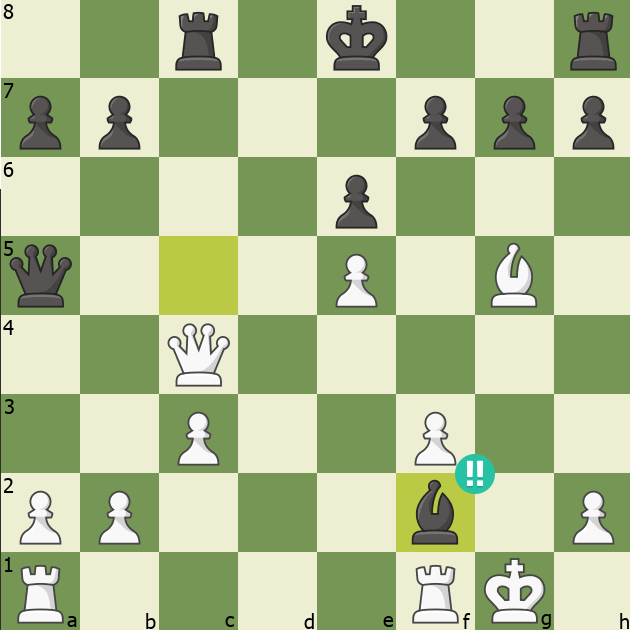
Brilliant Chess Move: Stunning Bishop Sacrifice Led to Checkmate
Most chess players have experienced it at least once. You spot a free pawn, win some material, and feel confident about your position—only to discover that your opponent had seen something much deeper.

Why Your Chess Accuracy Drops After Move 15
If your chess accuracy drops after move 15, the problem is not that you suddenly become a worse player. The problem is that the game has shifted from memory to understanding, and you have not trained that transition enough.
Why You Always Get in Time Trouble (And How Stockfish 18 Fixes It)
Every chess player knows the feeling. You navigate the opening perfectly. You transition into a solid middlegame. You build a completely fine, perhaps even slightly superior, position. And then, you glance at the clock. Your opponent has 15 minutes left. You have 42 seconds. Panic!