How Norway Chess Works: Rules, Scoring, Armageddon & Format
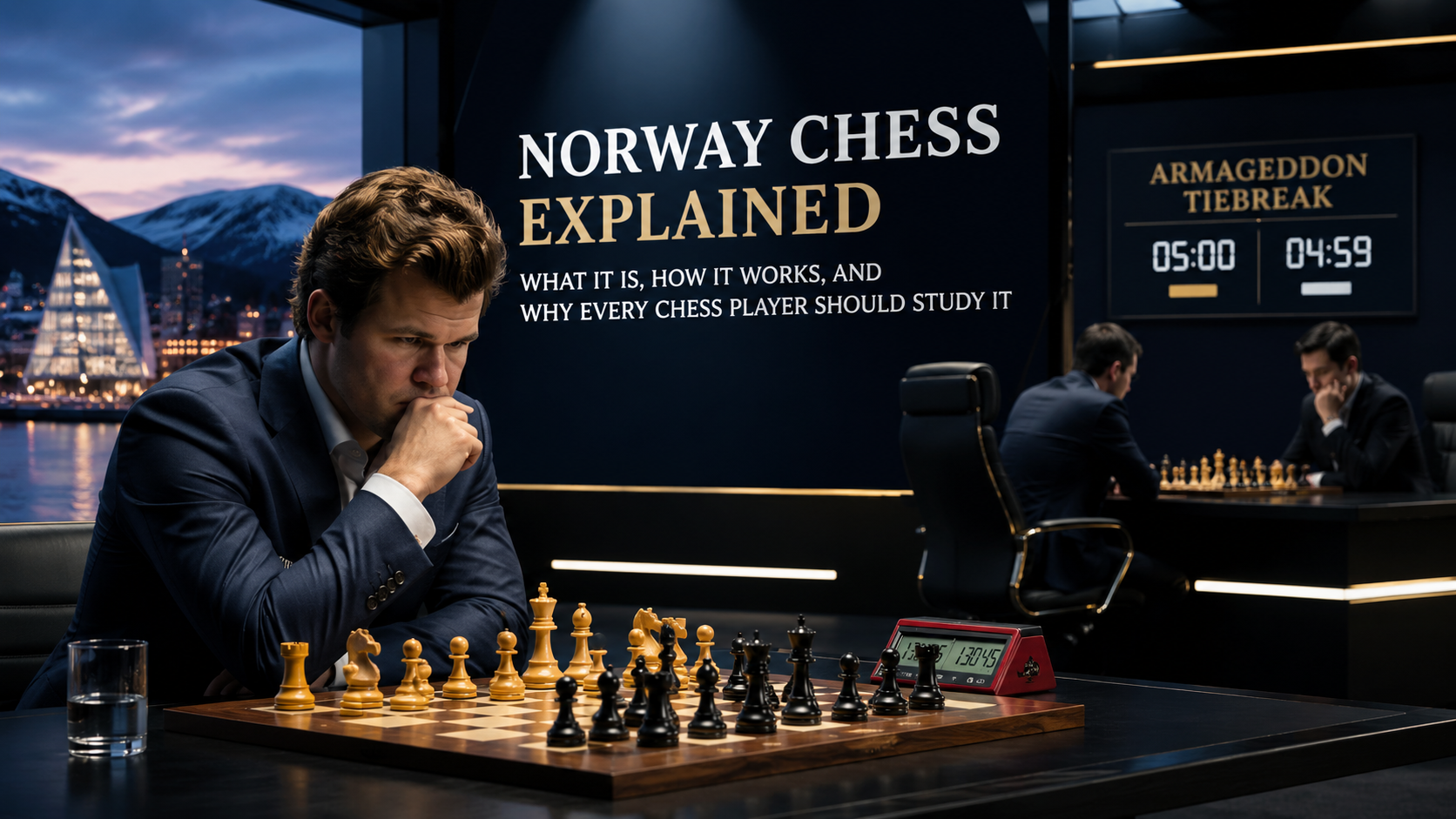
Norway Chess is one of the most prestigious elite chess tournaments in the world, but what makes it especially interesting is how easy it is to understand for casual fans. Every match produces a winner, which is rare in top-level classical chess and makes the event far more dramatic, accessible, and watchable than a standard all-draw round-robin.
For DeepBlunder, that makes Norway Chess more than a famous event. It is a perfect laboratory for studying what happens when strong human players collide with strict time management, practical decision-making, and the cold truth of engine analysis. If the best players in the world can misjudge a position under pressure, club players can learn a huge amount by studying those moments with Stockfish 18 and AI explanations.
What Is Norway Chess?
Norway Chess is an annual invitational super-tournament held in Norway, traditionally between May and June, and first staged in 2013. Over time, it has become one of the headline events on the international chess calendar because it consistently attracts world champions, top-ranked grandmasters, and major media attention.
What makes Norway Chess stand out is not only the strength of the field, but the format itself. The organizers designed the event to make elite chess more dynamic and engaging for players, spectators, and online viewers by combining classical games with Armageddon tiebreaks whenever the classical game ends in a draw. In other words, the tournament keeps the prestige of classical chess while removing the anticlimax of a fully undecided match.
Why Norway Chess Matters in Modern Chess
At the highest level, many tournaments are decided by tiny margins, and many classical games between elite grandmasters end in draws. Norway Chess responds to that reality by creating a structure that still values classical wins the most, but also demands a clear winner in every round.
That design turns every pairing into a story: either someone wins in classical chess, or both players must survive a second, sharper fight. This is one reason the event receives so much attention among chess fans. It is not just a list of pairings between famous names; it is a recurring test of calculation, nerves, stamina, and practical courage.
For content creators and training platforms, that is gold. The format naturally produces positions where “find the blunder” and “what Stockfish sees that you don’t” become highly relevant themes.
How Norway Chess Works
The official format is simple once broken into parts. Each edition features a small field of elite players, a double round-robin schedule, classical games as the main battleground, and Armageddon as the tiebreak when the main game is drawn.
Number of Players
The event typically features six players in the main tournament, with a parallel Norway Chess Women event using the same core concept. That compact field is one reason the tournament feels so intense. Every participant plays only world-class opposition, and there are very few easy rounds.
Double Round-Robin Format
Norway Chess uses a double round-robin structure with ten rounds in total. That means each player faces every other player twice, once with White and once with Black. This system is important for competitive balance because color allocation is even and no one can claim that the schedule was unusually favorable.
Classical Chess First
The classical game remains the core of the match. Norway Chess did not replace serious chess with speed chess; instead, it built a tournament around classical games and only uses Armageddon when the classical result is drawn. That distinction matters because the event still rewards deep preparation, opening strategy, positional understanding, and long-form calculation.
Norway Chess Time Control Explained
One of the most interesting features of Norway Chess is its time control. Each player receives two hours for the game with no increment at the start, and only after move 40 does a 10-second increment per move begin.
Why This Time Control Changes Everything
This rule creates a very different psychological environment from classical events that give an increment from move one. In those tournaments, players can often survive with better clock stability in long technical positions. At Norway Chess, players must navigate much of the game without the safety net of extra seconds appearing after every move.
That matters because many critical positions happen before move 40. A player may understand a position strategically but still fail to calculate accurately when the clock drops and there is no increment to soften the pressure. This is exactly where DeepBlunder-style analysis becomes useful: not just identifying that a move was bad, but explaining why the move became tempting to a human player in real conditions.
Why Fans Love It
The official site describes the time control as shorter and more accessible for fans to follow. That makes sense from a broadcast perspective. The games remain serious, but they also become easier to package for modern audiences who want tension, pace, and visible drama.
For readers who are newer to chess, this is an important point: Norway Chess is not famous only because Magnus Carlsen often plays there. It is famous because its structure reliably creates turning points, practical decisions, and mistakes that viewers can actually feel while watching.
What Is the Armageddon Tiebreak in Norway Chess?
The signature feature of Norway Chess is the Armageddon tiebreak. If a classical game ends in a draw, the players do not simply split the full score and move on. Instead, they immediately play a decisive tiebreak game to determine the winner of the match.
Armageddon Rules
The Armageddon rules are simple:
White gets 10 minutes and must win.
Black gets 7 minutes.
If the Armageddon game ends in a draw, Black is declared the winner.
This draw-odds rule compensates Black for having less time. It also means both sides face unusual practical demands. White often needs to press in positions where a draw would normally be acceptable, while Black must balance survival with ambition under a tighter clock.
Why Armageddon Is So Important for Improvement
From a training perspective, Armageddon is a gift. It compresses the difference between objective evaluation and practical decision-making. Engines may say a position is equal, but a human under Armageddon pressure often cannot play that equality perfectly.
That gap between engine truth and human execution is exactly where blunders are born. For DeepBlunder readers, this is where the content becomes distinctive. A Norway Chess Armageddon is not just entertainment. It is a live demonstration of how time, tension, imbalance, and calculation overload can turn world-class players into imperfect decision-makers.
Norway Chess Scoring System
The scoring system is another major reason the tournament feels aggressive and watchable. Classical wins are rewarded most heavily, while Armageddon only decides the score when the classical game ends in a draw.
Points Breakdown
Classical win: 3 points.
Draw in the classical game plus Armageddon win: 1.5 points.
Draw in the classical game plus Armageddon loss: 1 point.
Classical loss: 0 points.
Why the Scoring Encourages Fighting Chess
This structure strongly encourages players to push for a full classical win. A player who repeatedly draws classical games and survives only through Armageddon cannot keep pace with someone who scores true classical victories.
That changes tournament strategy from the first round onward. In standard elite events, a player may be satisfied with solid draws and then try to convert only a few favorable chances. Norway Chess makes that less attractive. The value gap between 3 points and 1.5 points is large enough that every serious contender has a reason to fight in the classical game.
Why Norway Chess Is Perfect for DeepBlunder Content
DeepBlunder should not cover Norway Chess as generic tournament news. The site’s advantage is its USP: Stockfish 18 plus AI explanations, practical blunder breakdowns, and a recognizable “human brain vs engine” angle. Norway Chess fits that identity almost perfectly because the event is built around practical stress.
What Stockfish Sees That Players Miss
In tense games without early increment, players often choose moves that are understandable but not best. An engine may instantly spot a tactical resource, a quiet defensive move, or a positional concession that keeps the evaluation stable. The human player, by contrast, sees a narrower picture shaped by time, fatigue, expectations, and emotion.
That difference is where a DeepBlunder article can beat generic chess coverage. Instead of merely saying that a player blundered on move 34, the article can ask a stronger question: what did Stockfish see that the player did not? That framing is more educational, more clickable, and much closer to real user intent from improvers.
Why Even Elite Players Blunder Here
Norway Chess is a reminder that blunders are not proof of ignorance. Often they are proof of pressure. The format amplifies exactly the kinds of conditions that create miscalculations: no increment before move 41, heavy tournament stakes, repeated pairings against elite rivals, and the possibility of immediate Armageddon if the classical game stays level.
That is why these games are so valuable for club players. If a world-class grandmaster can mis-evaluate a rook ending, miss a tactical shot, or drift into time trouble, then amateur mistakes become easier to understand and study without shame. The lesson is not “play like a machine.” The lesson is “understand where humans break down, then train around it.”
Norway Chess Women and Why It Matters
Norway Chess has expanded in recent years to include a women’s event under the same branded concept. That matters because it gives the women’s field comparable visibility inside one of the most recognizable formats in world chess.
It also makes the event broader from a content perspective. Publications can cover not only the overall format, but also how different players handle the same system, the same pressure, and the same scoring incentives.
The Confessional Booth
Another famous Norway Chess feature is the Confessional Booth, where players can voluntarily share live thoughts during the game without outside contact.
Why the Confessional Booth Is Great for Fans
This feature makes chess more understandable to non-experts because it reveals what players are actually calculating, fearing, or misunderstanding in real time. Viewers do not have to guess only from body language or engine bars; they can hear fragments of the player’s own internal narrative.
Why It Fits DeepBlunder Perfectly
For DeepBlunder, the Confessional Booth is content fuel. It creates a rare chance to compare three layers at once:
the player’s spoken evaluation,
the engine’s objective evaluation,
the actual game result.
That combination is ideal for articles such as “What the player thought vs what Stockfish saw” or “The moment the evaluation changed and the player did not realize it.” This is exactly the kind of niche, memorable content identity that helps a chess site stand out.
Norway Chess History in Brief
Norway Chess began in 2013 and has since become a recurring elite event with many of the world’s strongest players appearing across editions. The event has built its reputation through consistent elite fields, dramatic finishes, and a format that makes every game meaningful.
A strong article on “what is Norway Chess” should not become a giant archive page, but a concise historical section helps search intent. Many readers want quick context: when did the event start, who usually plays, and why is it seen as prestigious? Answering those questions in one section improves completeness without derailing the article.
Mid-Article CTA
Stop guessing why you lost winning positions. DeepBlunder shows what Stockfish 18 sees, explains your blunders in plain English, and helps you understand the exact moment your evaluation collapsed.
CTA idea:
Analyze 1 game free with DeepBlunder and discover the move your brain trusted but the engine instantly punished.
This CTA works well in the middle of the article because Norway Chess naturally raises the same question amateur players ask after their own games: “How did I go from equal to lost in three moves?” The answer is rarely just tactics. It is usually a mix of time pressure, incomplete calculation, and a blind spot that engine analysis can expose.
FAQ About Norway Chess
What is Norway Chess in simple terms?
Norway Chess is an annual elite invitational chess tournament in Norway where top players first play a classical game, and if that game ends in a draw, they play an Armageddon tiebreak to produce a winner.
How does Norway Chess work?
The event features six players, a double round-robin format, and ten total rounds. Each player meets every other player twice, once with White and once with Black, and every drawn classical game is followed by Armageddon.
Why is Norway Chess different from other tournaments?
It is different because it combines classical chess with mandatory Armageddon tiebreaks and a scoring system that strongly rewards classical wins. That reduces the value of safe draws and increases fighting play throughout the tournament.
What happens if the classical game is drawn?
If the classical game is drawn, the players immediately play Armageddon. White gets 10 minutes and must win, Black gets 7 minutes and wins the match if the Armageddon game ends in a draw.
How many points is a win worth in Norway Chess?
A classical win is worth 3 points, an Armageddon win after a drawn classical game is worth 1.5 points, an Armageddon loss after a classical draw is worth 1 point, and a classical loss is worth 0.
Is Norway Chess only for men?
No. The format also includes Norway Chess Women, using the same core tournament concept.
Why should club players study Norway Chess games?
Club players should study Norway Chess because the event produces high-quality examples of practical mistakes under pressure. The format highlights time trouble, decision fatigue, evaluation swings, and the difference between human calculation and engine precision in a very clear way.
What Club Players Can Learn From Norway Chess
The biggest lesson from Norway Chess is that strong chess is not only about opening preparation or memorized theory. It is also about making stable decisions when the position is tense, the clock is low, and the consequences of one inaccurate move are severe.
Lesson 1: Time Management Is a Skill
Because the increment arrives only after move 40, players must budget their thinking carefully. Many amateurs lose games not because they misunderstand the position, but because they spend too much time too early and then collapse later.
Lesson 2: Equal Positions Can Be Hard to Hold
Armageddon shows that an equal engine evaluation does not guarantee an easy human game. Practical chess often depends on who can ask harder questions over the board.
Lesson 3: Pressure Changes Move Quality
The format is designed to create pressure, and pressure changes behavior. Players may simplify too early, overpress with White, accept passive defense with Black, or choose safe-looking moves that fail tactically.
Conclusions
Norway Chess is one of the most important tournaments for anyone who wants to understand how elite chess works in the modern era. It combines prestige, world-class players, classical depth, Armageddon drama, and a scoring system that rewards courage over passivity.
For DeepBlunder, this topic is especially powerful because it naturally connects tournament interest with product intent. Norway Chess is not only a famous event to follow; it is a rich source of instructive blunders, evaluation swings, time-pressure mistakes, and “human vs engine” moments that align perfectly with Stockfish 18 plus AI explanations.
Where to go next
For more tournament formats and championship explainers, use the Chess Tournaments and Championships hub.
From the same category
Keep reading
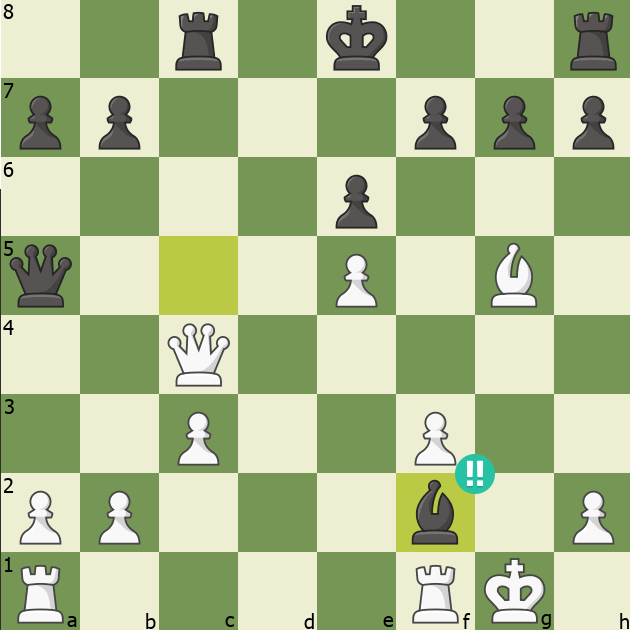
Brilliant Chess Move: Stunning Bishop Sacrifice Led to Checkmate
Most chess players have experienced it at least once. You spot a free pawn, win some material, and feel confident about your position—only to discover that your opponent had seen something much deeper.

Why Your Chess Accuracy Drops After Move 15
If your chess accuracy drops after move 15, the problem is not that you suddenly become a worse player. The problem is that the game has shifted from memory to understanding, and you have not trained that transition enough.

Why You Always Get in Time Trouble (And How Stockfish 18 Fixes It)
Every chess player knows the feeling. You navigate the opening perfectly. You transition into a solid middlegame. You build a completely fine, perhaps even slightly superior, position. And then, you glance at the clock. Your opponent has 15 minutes left. You have 42 seconds. Panic!