Why Is My Chess Accuracy So Low?

If you keep finishing games, opening the review, and seeing a low accuracy number, the feeling is always the same: confusion first, frustration second. You may even have won the game and still come away thinking you played terribly, just because the percentage on the screen looked worse than you expected. That reaction is common, especially among improving players who are using post-game analysis to judge their progress.
The problem is that most players ask the wrong question. They ask, “Why is my accuracy so low?” as if the number were a final verdict on their chess. A better question is: “What kind of mistakes are dragging my accuracy down, and which of them actually matter most for my improvement?” That small shift changes everything, because it turns accuracy from a confidence killer into a training signal.
Low accuracy does not always mean you played badly from start to finish. Sometimes it means one blunder wrecked the evaluation. Sometimes it means the game was sharp and difficult. Sometimes it means you won in practical terms but missed several stronger moves along the way. And sometimes it means you are comparing your normal human games to unrealistic screenshots from short, clean, or heavily forcing games.
That is why this topic matters so much for search. Players are not only asking about a number. They are asking what the number says about them. And the honest answer is reassuring: low accuracy usually says more about the shape of one game than about your long-term ability.
What low accuracy actually means
Accuracy is best understood as a game-level performance snapshot. It reflects how closely your moves matched stronger engine-approved choices in that specific game, not a permanent label of your overall chess strength.
That distinction matters because many players read one post-game percentage as if it were a full skill rating, when in reality it is far more sensitive to game type, position complexity, and a few key turning points.
A low accuracy score usually means one of three things happened:
You made one or more large mistakes that sharply changed the engine evaluation.
You missed a series of better moves even if the game remained playable.
The position became complicated enough that your practical choices drifted away from the strongest line.
That does not necessarily mean you were clueless the whole game. A messy 63% can contain good practical ideas. A clean-looking 83% can still hide missed chances. The number is useful, but only when you read it with context.
This is one reason the DeepBlunder accuracy cluster is already working so well. Articles like Is 70 Percent Accuracy Good in Chess?, Is 97% Accuracy Cheating in Chess?, and What Chess Accuracy Is Suspicious? all perform because players want help interpreting the number, not just seeing it.
Why your chess accuracy is low
You are making one big mistake that ruins the whole score
This is the most common reason.
A game can feel mostly fine, but one serious blunder can tank the final accuracy. You may play 20 decent moves, hang a rook once, then play another 10 decent moves and still finish with a percentage that feels far lower than the experience of the game. That happens because engines care a lot about evaluation swings, and one catastrophic move can outweigh a lot of ordinary human play.
This is especially common in beginner and club games, where a single oversight changes everything. If that sounds familiar, the root problem is usually not “low accuracy” in the abstract. It is practical blunder control. That is why How to Stop Hanging Pieces in Chess: A Complete Anti-Blunder Guide is one of the most useful internal follow-ups for this topic.
In other words, your score may be low not because every move was bad, but because one move was too bad.
You are missing one-move threats
A lot of low-accuracy games come from the same invisible habit: you start your turn by thinking about your own idea before checking what your opponent is threatening. That makes you vulnerable to simple tactics, loose pieces, forks, direct captures, and forcing moves that could have been spotted with a better scan.
This is why players often say, “I knew the rule, I knew the tactic, I knew the pattern — I just didn’t see it in the game.” The issue is not always raw knowledge. It is board awareness under real conditions.
If you keep asking why your accuracy crashes in games that felt normal, that is one of the first places to look. A missed one-move threat can do more damage to your score than five mediocre but acceptable moves. That is also why Why Do I Miss One-Move Threats in Chess? links so naturally into this article.
You are comparing yourself to unrealistic numbers
This is one of the biggest psychological traps in online chess.
Players see screenshots of 95%, 97%, 99%, or even 100% and assume those numbers represent “good chess,” while anything lower looks disappointing. But that is not a healthy scale. DeepBlunder’s own accuracy pieces already explain that 70% can be perfectly respectable for beginners, 77% is often good for improving players, and even very high scores do not automatically mean cheating or genius.
Short games, forcing lines, simple conversions, and theory-heavy positions can all inflate accuracy. Long messy fights, practical errors, and difficult decisions can pull it down. So if you are comparing your average game to the cleanest screenshots on the internet, you are reading the scale in a distorted way.
A low score often feels worse than it really is because the comparison standard is fake.
You are winning practically, not perfectly
This is an underrated cause of low accuracy.
A lot of improving players play messy but effective chess. They create threats, pressure the opponent, spot a winning tactical shot, and then finish the game with several imperfect moves. The result is a win, but the accuracy looks lower than expected because the engine found cleaner paths.
That can feel unfair, but it is actually useful. It tells you that your practical instincts are strong enough to win, while your technical conversion still needs work. That is exactly the kind of problem covered in How to Stop Losing Winning Positions in Chess, because many players are not losing due to total collapse — they are losing or stumbling because the final phase of the game is less clean than they think.
A player can be dangerous, creative, and still inaccurate. That is normal chess.
You are playing sharp positions
Not every low-accuracy game means poor chess. Some positions are simply hard.
When the board explodes with tactical possibilities, sacrifices, king danger, and complicated move orders, even good human play may drift away from the top engine line. That is why raw accuracy without context is so easy to misread. The same percentage means different things in a calm opening grind than it does in a tactical street fight.
This is also why watching top-level chess can be educational without being a fair comparison. Elite players handle complexity better, but they are also dealing with positions where accuracy can fluctuate because the decisions are genuinely hard.
You do not yet know what “good accuracy” looks like for your level
A lot of accuracy frustration is really expectation management.
If you are a beginner and you think “good chess” means always being above 85%, you will constantly feel behind. But the public practical bands most players use do not support that expectation. A number in the 70s can already mean you are avoiding the worst blunders and playing something that looks like real chess.
That is why learning the scale matters so much. Your score is not low simply because it is not elite. It is only low relative to the level, position type, and consistency standard you should reasonably be using.
Can you win with low accuracy?
Yes — and it happens all the time.
This is one of the most important truths for improving players to learn. A game is not won by pleasing the engine. It is won by scoring more effectively than the opponent inside the position that actually happened. That means you can absolutely win with low accuracy if your opponent plays worse, collapses tactically, or misses the practical chances that mattered most.
In fact, many club games are won by the player who makes the last major mistake, not by the player who played the cleanest engine line throughout. That is why low-accuracy wins are common and high-accuracy losses are possible too. Practical chess is messy.
This does not make accuracy useless. It makes it diagnostic. A low-accuracy win tells you that the result was good, but the process still left improvement on the table. That is exactly the kind of game you should review carefully, because it hides easy future gains.
Why your accuracy feels low even when you improved
There is another trap here: sometimes your accuracy number looks underwhelming even when your chess is clearly getting better.
How?
Because improvement is not always linear in engine terms. A player may become more ambitious, enter sharper positions, take more initiative, and play more testing chess — which can temporarily create messier accuracy scores even while practical strength improves. That happens because more ambitious games often produce more difficult decisions.
A second reason is that once you stop making obvious opening mistakes, your games reach more complex middlegames. That is progress. But complex middlegames also create more chances for imperfect moves, so your score may not jump as quickly as your understanding does.
This is why you should track multiple signs of growth:
Are you hanging fewer pieces?
Are you seeing one-move threats earlier?
Are you converting winning positions better?
Are your losses becoming more competitive?
Are your opening positions less chaotic?
If the answers are improving, then your chess may be healthier than one post-game number suggests. This is also why Why Is My Lichess Rating Higher Than Chess.com? is such a useful companion read: both topics teach the same core lesson that chess numbers need context before they become meaningful.
The real reasons beginners get low accuracy
They move too fast in simple positions
Beginners often think accuracy problems come from difficult tactics. Sometimes they do. But a lot of low scores come from something simpler: impatience in positions that did not require speed at all.
A free recapture is missed. A piece is left undefended. A king safety issue is ignored. A forcing reply is not checked. These are not deep strategic failures. They are routine scanning failures. That is why anti-blunder discipline matters so much more at lower levels than exotic opening theory.
They do not identify critical moments
Not every move in chess is equally important. Some moves are routine. Some change the entire game.
Players with low accuracy often treat all moves the same. They blitz out a central recapture with the same speed they use in a sharp tactical position where one wrong move loses everything. That is why the final score feels harsher than expected: they are spending too little thought where the game really turns.
They review the number, not the position
A lot of beginners finish a game, see the percentage, and stop there. That is the worst way to use analysis.
The useful review questions are:
Where was the first big drop?
What tactical or positional idea did I miss?
Was the mistake a blunder, an inaccuracy, or just a missed improvement?
Would I recognize this pattern next time?
Without those questions, accuracy becomes a mood instead of a tool.
Why low accuracy is not the same as “bad player”
This is probably the most important emotional takeaway in the entire article.
A low-accuracy game does not mean you are a bad player. It means that in one game, under one set of conditions, your moves diverged from stronger choices more than you hoped. That is a much smaller and more useful claim.
Players improve much faster when they stop moralizing their own numbers. Accuracy is feedback, not identity. The number is there to point at a pattern, not to define your ceiling.
This is also why the cheating/accuracy cluster matters so much on DeepBlunder. Articles like Is 97% Accuracy Cheating in Chess? and What Chess Accuracy Is Suspicious? are useful not only because they answer search queries, but because they reset unrealistic beliefs about what the number can and cannot mean.
If high accuracy is not automatically proof of cheating, then low accuracy is also not automatically proof that you are hopeless. Both ideas belong to the same healthy framework.
How to raise your accuracy without obsessing over it
1. Stop hanging pieces
This is still the biggest shortcut.
A player who reduces free piece drops often gains more accuracy faster than a player who memorizes ten more opening lines. That is because blunders create massive evaluation swings, and massive evaluation swings destroy post-game percentages.
2. Check your opponent’s forcing moves first
Before you look at your own plan, ask:
Do they have a check?
Do they have a capture?
Do they have a direct threat?
This one routine prevents an enormous number of low-accuracy collapses. It also directly overlaps with the themes in Why Do I Miss One-Move Threats in Chess?.
3. Slow down in turning points
When the center opens, a tactic appears, a king becomes exposed, or a trade changes the structure, slow down. These are the moments where accuracy is usually won or lost.
4. Learn clean conversion
Many players do the hard part and then bleed accuracy in winning positions by chasing beauty instead of simplicity. If that sounds familiar, spend more time on clean finishing patterns and simple technical wins.
5. Judge trends, not one game
One low-accuracy game can mean almost anything. Ten games tell a clearer story. If your average is rising and your blunders are falling, you are moving in the right direction even if individual games remain messy.
If your accuracy keeps bouncing around and you are tired of guessing what the number means, use DeepBlunder to review the positions behind the percentage instead of obsessing over the final score.
That is where the real improvement happens: seeing the move where the evaluation collapsed, identifying whether the problem was a hanging piece, a missed one-move threat, or a badly converted advantage, and then training the exact pattern that keeps returning in your games.
FAQ
Why is my chess accuracy so low?
Your chess accuracy is usually low because one or two major mistakes dragged the whole score down, or because your moves frequently drifted away from the strongest engine choices in critical positions.
That does not always mean the whole game was bad. Often it means one blunder, one missed tactic, or one poorly handled phase changed the evaluation more than you realized.
It can also happen when the game was sharp and difficult, which makes perfect engine-like play less realistic.
A low number should be read as a review clue, not a final judgment on your skill.
The right question is not “Why am I bad?” but “Which kind of mistake keeps pulling this score down?”
That shift makes the analysis far more useful.
Can you win with low accuracy in chess?
Yes, absolutely. Many club and beginner games are won by the player who makes fewer decisive mistakes, not by the player who stays closest to the engine every move.
That means you can win with a messy score if your opponent collapses tactically or blunders at the wrong moment.
A low-accuracy win usually means your result was good but your process was still imperfect.
That makes the game especially valuable to review, because it contains improvement without the pain of a loss.
It also shows why practical chess and engine-perfect chess are not the same thing.
The scoreboard and the analysis report do not always tell the same story.
Why is my accuracy low even when I win?
Because winning and playing the cleanest moves are different things. You may create strong practical pressure, spot the move that matters most, or benefit from your opponent’s mistakes while still missing several better continuations along the way.
That is common in improving-player games.
The engine may see smoother, simpler, or more technical winning lines than the one you actually chose.
So the win is real, but the percentage still reflects the missed precision.
This is also why players who struggle to convert advantages should study clean finishing technique and simple winning methods.
Often the result is fine, but the route was messier than it needed to be.
What is a good chess accuracy for beginners?
A good beginner accuracy is usually lower than people think. DeepBlunder’s existing accuracy article explains that around 70% can already be a positive sign for many beginners, especially if it means you are no longer blundering pieces constantly or getting lost in every phase of the game.
That is why a score in the 60s or low 70s is not automatically a disaster.
Context matters: the opening, the complexity of the position, the length of the game, and the presence of big blunders all change how the number should be read.
The important question is whether your average trend is improving, not whether every single game hits an elite-looking number.
A stable rise from chaos to control matters more than screenshot-worthy peaks.
That is real progress.
Does low accuracy mean I am bad at chess?
No. Low accuracy in one game means your moves were less precise than stronger engine-approved options in that game. It does not define your talent, your long-term ceiling, or your overall identity as a player.
A player can have a low-accuracy game because of one blunder, one sharp tactical position, one time scramble, or one bad phase in an otherwise playable performance.
That is why the number should be treated as feedback, not as a verdict.
What matters most is whether the same kind of mistake keeps happening.
If you identify and fix the pattern, your chess improves and the numbers usually follow.
That is a much healthier way to think about analysis.
How do I improve my chess accuracy fast?
The fastest way to improve your accuracy is usually not chasing fancy lines. It is removing big practical errors. Start by stopping hung pieces, checking your opponent’s threats first, and slowing down in critical moments.
Those habits eliminate the kinds of mistakes that cause the largest evaluation swings.
After that, focus on cleaner conversion in winning positions so your good games stay clean all the way to the end.
Do not review only the final percentage. Review the first big drop and the tactical or positional reason behind it.
That is where the real gain lives.
Accuracy rises fastest when decision quality becomes more stable.
Conclusions
If your chess accuracy feels low, the number is usually pointing to a practical issue, not a permanent flaw. One blunder, one missed threat, one sloppy conversion, or one messy tactical phase can distort the final score more than most players realize.
That is why the smartest response is not panic. It is diagnosis. Ask what type of move caused the damage, whether the position was genuinely difficult, and whether the same pattern has shown up before. Once you do that, low accuracy becomes useful instead of demoralizing.
From the same category
Keep reading
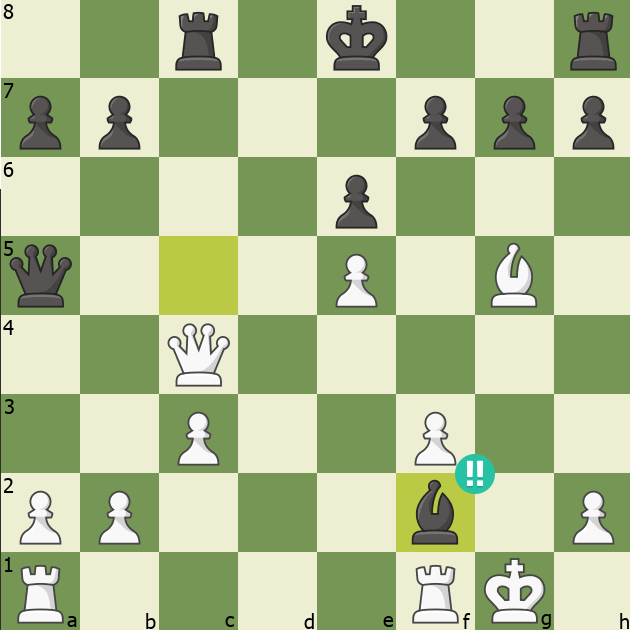
Brilliant Chess Move: Stunning Bishop Sacrifice Led to Checkmate
Most chess players have experienced it at least once. You spot a free pawn, win some material, and feel confident about your position—only to discover that your opponent had seen something much deeper.

Why Your Chess Accuracy Drops After Move 15
If your chess accuracy drops after move 15, the problem is not that you suddenly become a worse player. The problem is that the game has shifted from memory to understanding, and you have not trained that transition enough.

Why You Always Get in Time Trouble (And How Stockfish 18 Fixes It)
Every chess player knows the feeling. You navigate the opening perfectly. You transition into a solid middlegame. You build a completely fine, perhaps even slightly superior, position. And then, you glance at the clock. Your opponent has 15 minutes left. You have 42 seconds. Panic!